Updated: 2026-02-16
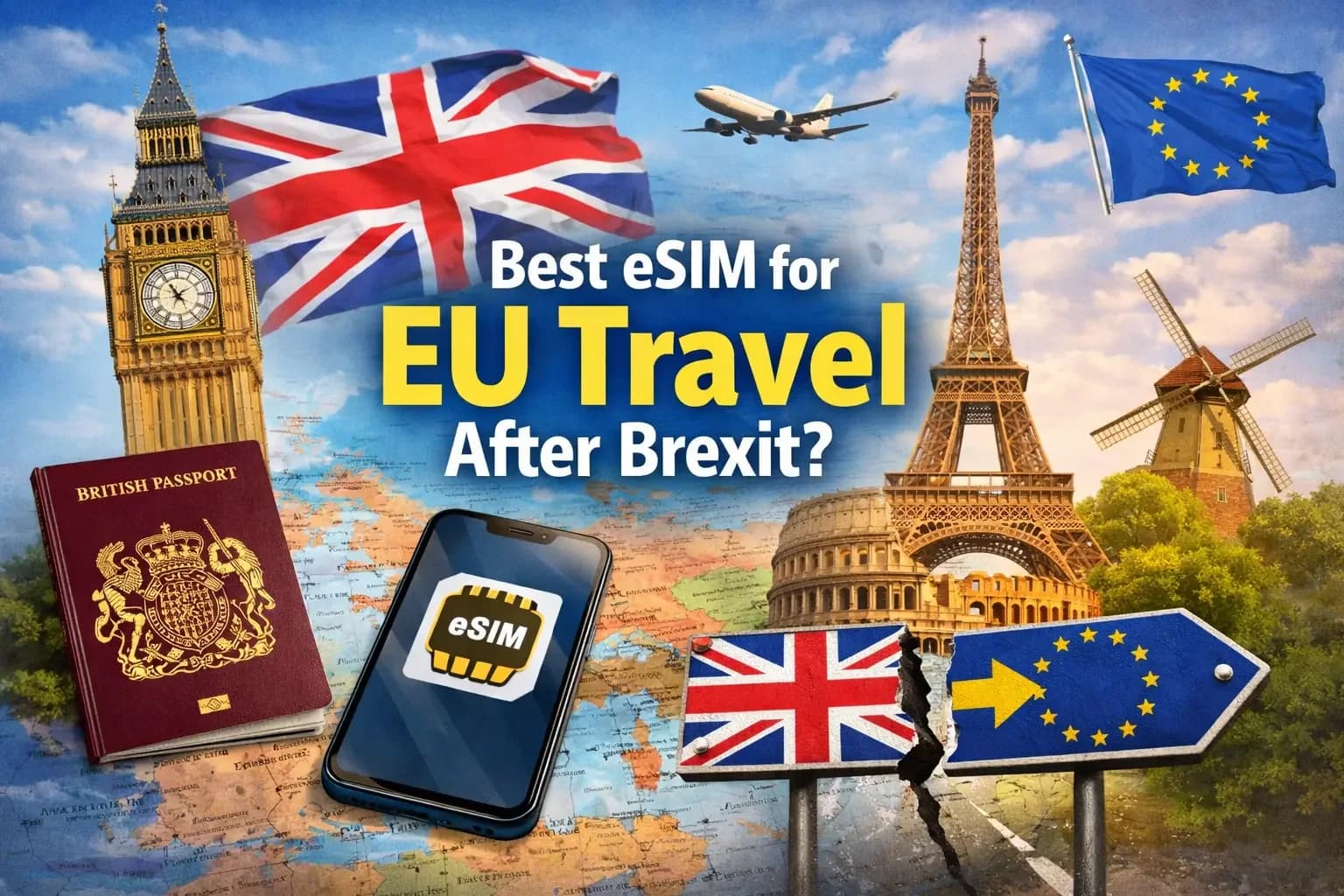
For British travellers heading to the European Union, the days of seamless mobile data are largely over. Brexit brought an end to the "Roam Like at Home" policy for most UK networks, reintroducing the specter of unexpected roaming charges. What was once a simple matter of landing and connecting now requires a strategic approach to avoid bill shock. This guide explores why traditional roaming is no longer viable for Brits in the EU and how an eSIM provides the definitive solution for reliable, affordable connectivity, ensuring your European adventures remain connected and cost-effective.
- The Post-Brexit Reality: Your UK Mobile Bill Doesn't Like Europe Anymore
- The End of an Era: Why 'Roam Like at Home' Is Over for British Travellers
- Decoding the Fine Print: What UK Providers Aren't Telling You About EU Roaming
- eSIMs: Your Essential Post-Brexit Tool for Avoiding UK Roaming Charges in the EU
- eSIM vs. UK Roaming vs. Local SIM: The Smart Choice for British Travellers
- Choosing Your Cellesim Europe eSIM: Data Plans for Every British Trip
- Simple Steps for Brits: Activating Your Cellesim EU eSIM
- Maximising Your Connectivity: Pro Tips for Using Your eSIM in Europe
- Frequently Asked Questions
Europe eSIM Plans for UK Travellers from $4.50
Avoid post-Brexit roaming fees. Join 50,000+ British travellers connecting instantly in 42 European countries with Cellesim.
Get Your Europe eSIMThe Post-Brexit Reality: Your UK Mobile Bill Doesn't Like Europe Anymore
Remember the good old days? Landing at Charles de Gaulle, switching off airplane mode, and your phone just worked. No scary texts, no frantic searches for airport Wi-Fi. That was 'Roam Like at Home'. Unfortunately, for most of us travelling from the UK, that convenience vanished with Brexit. Now, the moment your plane's wheels touch down in the EU, a new reality kicks in, the very real threat of roaming charges. It’s a frustrating step backward, but it doesn't have to ruin your trip. Finding the best eSIM for Europe for UK travellers is now an essential part of the pre-travel checklist, just like booking your flights. It’s the modern solution to a modern problem, ensuring you can use Google Maps to find your hotel in Lisbon or book a last-minute ticket for the Colosseum without dreading the bill waiting for you back home. Planning a weekend in Paris? An eSIM for France can be set up before you even leave for the airport.
The End of an Era: Why 'Roam Like at Home' Is Over for British Travellers
For years, UK citizens enjoyed seamless mobile use across the European Union. This arrangement, mandated by the EU, meant your calls, texts, and data allowance worked abroad just as they did at home. Post-Brexit, UK mobile operators are no longer legally required to offer this perk, and one by one, the major players have reintroduced roaming fees.
Providers like EE, Vodafone, and Three, which cover a huge portion of the UK market, have brought back daily charges. These might seem small at first glance, typically around £2 per day, but they add up fast. A two-week holiday in Spain could add an extra £28 to your bill, just for the privilege of using your own data. And that's often just the beginning. To see how much you could be overpaying, it's worth taking a moment to calculate your potential roaming fees and compare them with a prepaid option.
Decoding the Fine Print: What UK Providers Aren't Telling You About EU Roaming
Beyond the daily fees, there's a labyrinth of fine print designed to catch you out. Many UK plans now come with a 'fair usage' cap on roaming data, which can be significantly lower than your domestic allowance. You might have unlimited data in the UK, but find yourself capped at 12GB or 25GB in the EU. Once you hit that limit, you'll either be cut off or charged exorbitant rates for more data.
Furthermore, some providers throttle your connection speed once you're roaming. You might have a 5G plan at home, but find yourself struggling with sluggish 3G speeds in Germany, making everything from video calls to uploading photos a frustratingly slow experience. This is where the search for better mobile data in Europe for UK tourists becomes critical. You need a solution that offers transparency, speed, and value, not hidden caps and surprise charges. For detailed information on consumer rights regarding roaming, consult the official Ofcom guidance on mobile roaming.
eSIMs: Your Essential Post-Brexit Tool for Avoiding UK Roaming Charges in the EU
If you've upgraded your phone in the last few years, you likely already have the technology you need. An eSIM (embedded Subscriber Identity Module) is a small chip built directly into your device's motherboard. It does everything a traditional plastic SIM card does, but it's 100% digital. Think of it as a rewritable SIM card that you can program with a new data plan just by scanning a QR code.
This piece of travel technology for Europe is a game-changer, especially for British travellers seeking to navigate the complexities of post-Brexit mobile data. Instead of being tied to your home provider's expensive roaming packages, you can buy a short-term, data-only plan from a global provider like Cellesim before you even leave home. You get to connect to local networks in the EU, paying local rates, all without physically changing your SIM card. For UK citizens, this means peace of mind; no more worrying about unexpected roaming charges from your EE, Vodafone, or Three contract. Before you dive in, it's always a good idea to check if your phone is eSIM-ready, most modern iPhones, Google Pixels, and Samsung Galaxy devices are designed to support eSIM functionality, making it easier than ever for UK users to get the best eSIM for Europe and UK travel.
eSIM vs. UK Roaming vs. Local SIM: The Smart Choice for British Travellers
While you could still land in the EU and hunt down a local physical SIM card, or simply rely on your UK network's roaming, the eSIM offers a far more streamlined experience tailored for the modern British traveller. Let's break down the key differences:
| Option | Price (7 days) | Speed/Reliability | Setup for Brits | Original UK Number |
|---|---|---|---|---|
| Cellesim eSIM | From $4.50 | Local 4G/5G speeds | Instant, online, pre-trip | Kept active for calls/SMS |
| UK Network Roaming | £14+ (£2/day) | Often throttled 3G/4G | Automatic, but costly | Full use, but expensive data |
| Local Physical SIM | £10-£20 | Local 4G/5G speeds | Airport/shop visit, registration | Often needs swapping, risk of losing |
For British travellers, the advantages of an eSIM are clear. You bypass the high costs and hidden limitations of UK roaming, while avoiding the hassle of finding and registering a local SIM card upon arrival. With Cellesim, you purchase your data plan online, receive it instantly via email, and activate it before you even leave home. This means you step off the plane with immediate access to fast, affordable data across Europe, without changing your physical SIM or risking its loss. This seamless connectivity is particularly valuable when you need to access maps, translate phrases, or communicate with loved ones from the moment you land. For a deeper dive into connectivity options, compare airport SIM cards vs. eSIM.
Choosing Your Cellesim Europe eSIM: Data Plans for Every British Trip
Cellesim offers a range of flexible eSIM plans designed to suit different travel needs for British visitors to Europe. Whether you're planning a short city break or an extended multi-country tour, there's a data package for you.
- Light Users: If your trip is short (1-3 days) and your usage mainly involves maps, messaging, and occasional browsing, a 1 GB or 3 GB plan might suffice. These are ideal for quick weekend getaways to places like Amsterdam or Berlin.
- Moderate Users: For trips lasting 4-7 days with regular social media use, navigation, and some streaming, a 5 GB or 10 GB plan offers a comfortable balance. This is often the sweet spot for many British holidaymakers exploring regions like the South of France or the Italian Lakes.
- Heavy Users & Digital Nomads: If you're staying for longer, working remotely, or frequently uploading high-resolution content, consider plans with 20 GB or more. These provide ample data for comprehensive connectivity across all 42 countries covered by Cellesim's European eSIM.
To accurately gauge your data requirements, use a smart data calculator, which provides estimates based on your typical online activities. Cellesim's Europe eSIM covers 42 countries, ensuring seamless connectivity from Portugal to Poland without switching plans. With Cellesim's Europe eSIM, British travellers benefit from broad network access and competitive local rates.
Simple Steps for Brits: Activating Your Cellesim EU eSIM
Activating your Cellesim EU eSIM is a straightforward process, designed for quick setup before or during your trip. Follow these simple steps to ensure you're connected from the moment you land:
- Purchase Your eSIM: Visit cellesim.com and choose your desired Europe eSIM plan. Complete the purchase, and your eSIM QR code will be sent to your email instantly.
- Install the eSIM: Before you travel, or once you have a stable Wi-Fi connection (e.g., at your hotel or the airport), open your phone's settings. Navigate to 'Mobile Data' or 'Cellular' and select 'Add eSIM' or 'Add Data Plan'. Scan the QR code from your email. If you only have one phone, you can manually enter the details.
- Label Your Plans: Give your new eSIM a clear label, such as "Europe Travel" or "Cellesim EU," to easily distinguish it from your UK primary SIM.
- Choose for Mobile Data: In your phone's mobile data settings, select your newly installed Cellesim eSIM for 'Mobile Data'. Ensure 'Data Roaming' is turned ON for the eSIM profile (this enables it to connect to local networks, it's not the same as UK roaming charges).
- Keep Your UK SIM Active (Optional): Your physical UK SIM can remain active for calls and texts if needed, but make sure it is NOT selected for mobile data to avoid roaming charges.
For a detailed walkthrough, refer to our complete eSIM setup guide or the interactive setup guide.
Maximising Your Connectivity: Pro Tips for Using Your eSIM in Europe
To make the most of your Cellesim EU eSIM and ensure a hassle-free experience, consider these practical tips tailored for British travellers:
- Activate Strategically: You can install your eSIM before you leave the UK, but activate the data plan when you land in Europe. This ensures your data validity period starts when you actually need it.
- Monitor Data Usage: Regularly check your data consumption through your phone settings or the Cellesim portal. This helps you manage your plan effectively and top up if necessary.
- Use Wi-Fi When Available: Connect to hotel, cafe, or public Wi-Fi networks for heavy data activities like video streaming or large downloads to conserve your eSIM data.
- Disable Data for UK SIM: Double-check that mobile data is switched off for your physical UK SIM card in your phone's settings to prevent accidental roaming charges. Your UK number will still receive calls and texts.
- Utilise Offline Maps: Download offline maps for your destinations (e.g., via Google Maps) before you leave the UK or while on Wi-Fi. This saves data and provides navigation even in areas with poor signal. Refer to our guide on how to save data abroad.
Using an eSIM simplifies your travel connectivity by putting you in control. It's an efficient, cost-effective way for British tourists to stay online across the EU.
Ready for Seamless EU Connectivity?
Say goodbye to Brexit roaming worries. Connect instantly across Europe in 42 countries.
Start Your Connected JourneyTrusted by 50,000+ travellers worldwide. 24/7 Support: [email protected]
Frequently Asked Questions
Can I use my UK phone number with an eSIM in the EU?
Yes, absolutely. Your Cellesim eSIM provides data connectivity, while your physical UK SIM remains active for calls and texts on your original number. Just ensure you select the Cellesim eSIM for mobile data in your phone settings to avoid roaming charges from your UK provider.
Will my Cellesim eSIM work with 5G in Europe?
Cellesim eSIMs connect to the best available local networks in each country. If 5G is available from the partner network in your location and your device supports 5G, you will typically get 5G speeds. Our eSIM speed test results confirm strong performance in many cities.
How do I check if my phone is compatible with eSIMs?
Most modern smartphones, including iPhones (XS, XR, 11 series and newer), Samsung Galaxy (S20 series and newer), and Google Pixel (3 series and newer), support eSIM technology. You can quickly verify your device's compatibility using our online eSIM checker or by visiting your phone's settings.
Is Cellesim suitable for long trips or just short breaks?
Cellesim offers flexible plans suitable for all trip durations. For short breaks, smaller data packages provide cost-effective connectivity. For longer trips, larger data plans or even multiple eSIMs can be purchased to cover extended stays across Europe.
What happens if I use all my data allowance?
If you deplete your data allowance, your internet access will cease. You will receive notifications when your data is running low, allowing you to easily purchase a top-up plan directly from the Cellesim website to instantly restore your connectivity.
Why should British travellers choose an eSIM over a local SIM in Europe?
An eSIM offers unparalleled convenience for British travellers. You can purchase and activate it before departure, avoiding the need to find a local store, deal with language barriers, or change your physical SIM card upon arrival. This ensures instant connectivity from the moment you land, without the hassle.