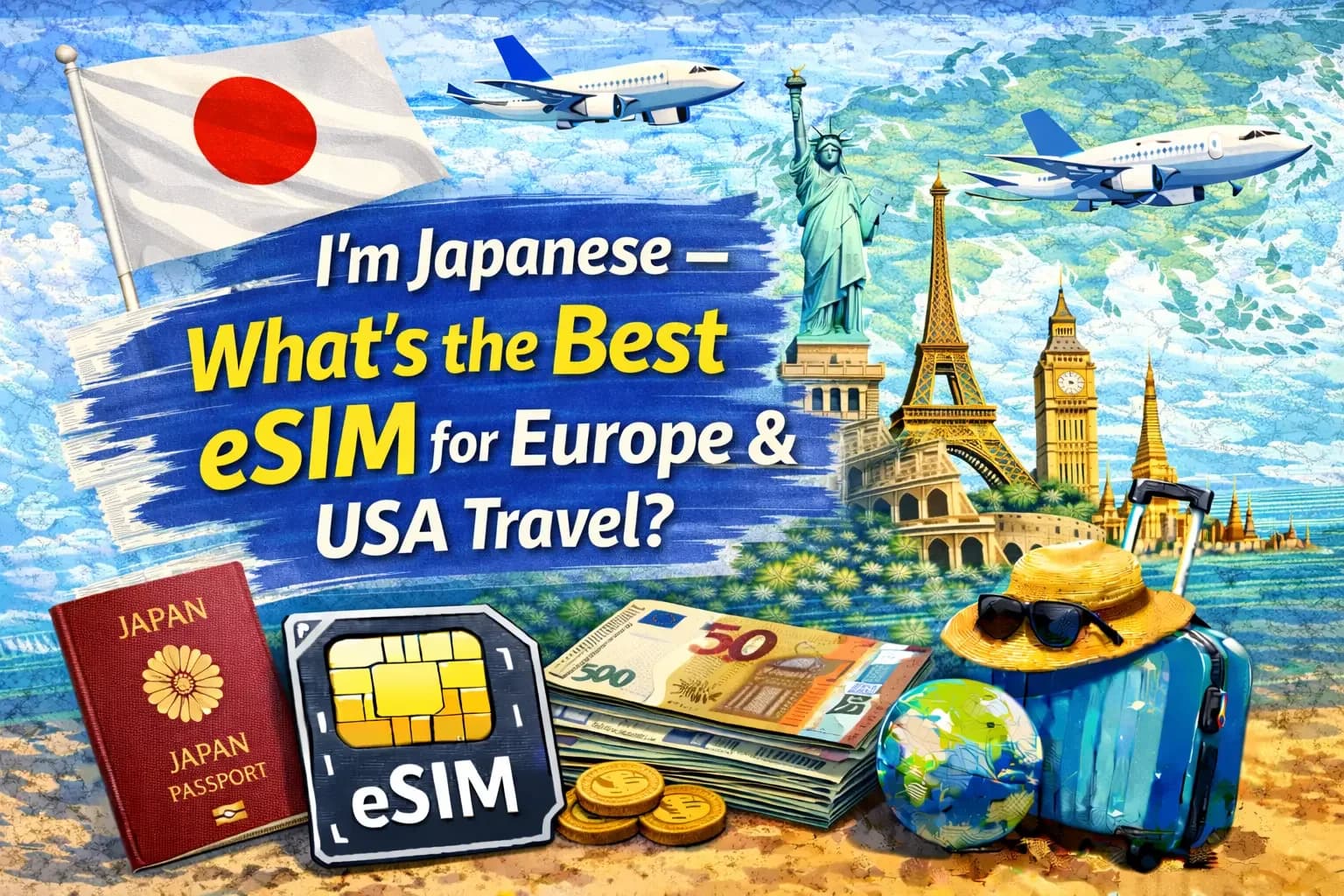
For Japanese travelers planning journeys to Europe or the USA, the traditional anxieties surrounding international mobile connectivity are a thing of the past. Gone are the days of wrestling with expensive roaming charges from carriers like Docomo, au, or SoftBank, or losing valuable travel time searching for local physical SIM cards upon arrival. The advent of eSIM technology has revolutionized how Japanese tourists stay connected, offering a modern, cost-effective, and exceptionally convenient alternative for seamless global travel.
- The Evolution of Travel Connectivity for Japanese Travelers
- Why eSIM is Ideal for Japanese Exploring Europe and the USA
- Navigating Europe with a Cellesim eSIM: Key Considerations
- Seamless Stateside Journeys: Your Cellesim eSIM for the USA
- Estimating Your Data Needs for Europe & USA Travel
- Activating Your Cellesim eSIM: A Simple Guide
- eSIM vs. Traditional Options: A Cost & Convenience Comparison for Japanese Travelers
- Essential Tips for Japanese Travelers in Europe & the USA
- Frequently Asked Questions
Cellesim eSIM Plans for Europe & USA
Connect instantly across Europe and the USA with Cellesim. Join 50,000+ happy customers in 200+ countries.
View Global PlansThe Evolution of Travel Connectivity for Japanese Travelers
For decades, Japanese travelers faced a limited set of options for staying online abroad. The primary methods involved either activating international roaming through domestic carriers like Docomo, au, or SoftBank, or purchasing a local physical SIM card upon arrival. Both presented distinct challenges.
International roaming, while convenient, often came with prohibitive costs. Unexpected data overages could lead to "bill shock" after returning home. Meanwhile, acquiring a local SIM card required finding a vendor, navigating language barriers, and physically swapping out your Japanese SIM, meaning you couldn't receive calls or messages on your primary number. This process consumed valuable time that could be better spent exploring your destination.
The introduction of eSIM technology has transformed this landscape. An eSIM is a digital SIM embedded directly into compatible smartphones, tablets, and smartwatches. It eliminates the need for a physical card, allowing travelers to activate a local or international data plan simply by scanning a QR code or entering a code. This digital solution provides flexibility, cost control, and instant connectivity, making it a superior choice for modern Japanese globetrotters.
The shift to eSIM technology reflects a broader demand for seamless, on-demand connectivity that aligns with the fast-paced nature of international travel.
Why eSIM is Ideal for Japanese Exploring Europe and the USA
Cellesim eSIMs offer several compelling advantages specifically beneficial for Japanese travelers heading to Europe and the USA.
- Cost-Effectiveness: Cellesim plans are significantly more affordable than traditional roaming packages, allowing you to manage your budget effectively without sacrificing connectivity.
- Instant Connectivity: Purchase your eSIM before you depart, activate it with a simple QR scan, and connect the moment your plane lands. No more airport queues or searching for Wi-Fi.
- Keep Your Japanese Number Active: With an eSIM, your physical Japanese SIM remains in your phone, allowing you to receive calls and texts on your primary number while using the eSIM for data. This is crucial for authentication, staying in touch with family, or managing banking alerts.
- Ease of Use: The setup process is straightforward, often taking only a few minutes. This avoids the hassle of understanding foreign mobile contracts or finding compatible physical SIM cards in unfamiliar environments. You can learn more about this in our complete eSIM setup guide.
- Flexibility: Easily switch between different data plans or providers if your travel plans change, all from within your phone's settings.
Navigating Europe with a Cellesim eSIM: Key Considerations
Europe, with its diverse cultures and interconnected countries, is an ideal destination for an eSIM. A single Cellesim Europe eSIM can provide coverage across multiple nations, simplifying your connectivity as you travel from France to Italy, Germany to Spain, and beyond.
Network Coverage Across Europe
Cellesim partners with major network operators across Europe to provide robust 4G and 5G connectivity. This means you can expect strong signals in metropolitan areas and reliable service on inter-city train routes. Before your trip, you can review network specifics for individual countries through resources like OpenSignal to get an idea of performance.
Data Packages for European Adventures
Consider the duration of your trip and your planned activities. A 10GB plan might be sufficient for a week-long city break focused on navigation and messaging, while a longer, multi-country tour spanning several weeks might benefit from a 20GB or 30GB plan. Cellesim offers various data allowances and validity periods to match different travel styles.
Seamless Stateside Journeys: Your Cellesim eSIM for the USA
The United States, with its vast distances and varied landscapes, demands reliable mobile data for navigation, communication, and sharing your travel experiences. A Cellesim eSIM ensures you stay connected whether you are exploring New York City, road-tripping through national parks, or enjoying the beaches of California.
Reliable Networks Across the USA
In the USA, Cellesim leverages partnerships with leading carriers such as AT&T, T-Mobile, and Verizon, providing extensive 4G LTE and growing 5G coverage. This ensures strong service in urban centers, along major highways, and in many rural areas. For detailed coverage maps, checking individual carrier websites is advisable.
Tailored Data for American Travel
American travel often involves extensive use of GPS, ride-sharing apps, and streaming content during downtime, especially on long commutes or road trips. Japanese travelers should consider higher data packages for US travel compared to Europe if they plan extensive exploration or rely heavily on mobile data for entertainment. Cellesim offers flexible plans that cater to both short city visits and extended cross-country adventures. For more specific guidance, read our article on the best eSIM for USA travel.
Estimating Your Data Needs for Europe & USA Travel
Understanding how much data you'll need is crucial for selecting the right eSIM plan. Overestimating leads to unnecessary costs, while underestimating can leave you scrambling for connectivity.
- Basic Usage (1-3 GB/week): Ideal for light browsing, messaging (LINE, WhatsApp), email, and occasional map use.
- Moderate Usage (5-10 GB/week): Suitable for frequent navigation, regular social media updates (Instagram, X), light video streaming, and occasional video calls.
- Heavy Usage (10-20+ GB/week): Recommended for business travelers, those who rely heavily on video calls, high-definition streaming, or frequent tethering to other devices.
Remember that public Wi-Fi is available in many cafes, hotels, and attractions, especially in Europe's major cities. However, relying solely on public Wi-Fi can be insecure and inconsistent. An eSIM provides a private, stable, and secure connection wherever you go.
Activating Your Cellesim eSIM: A Simple Guide
Activating your Cellesim eSIM is designed to be quick and easy, ensuring you can connect without complications.
- Purchase Your Plan: Visit cellesim.com, select your desired Europe or USA eSIM plan, and complete your purchase. You will receive an email with your eSIM's QR code and activation instructions.
- Scan the QR Code: On your eSIM-compatible smartphone, go to Settings > Cellular/Mobile Data > Add eSIM/Add Data Plan. Scan the QR code provided in your email.
- Install and Label: Follow the on-screen prompts to install the eSIM. Give it a recognizable label, such as "Europe Travel" or "USA Data," to differentiate it from your primary Japanese SIM.
- Activate on Arrival: Before or upon arrival at your destination, ensure your Cellesim eSIM is turned on in your phone's settings and that data roaming is enabled for the eSIM (this is not "roaming" in the traditional expensive sense, but rather activating the eSIM's local network access). Turn off data for your primary Japanese SIM to avoid any unintentional charges.
It's generally recommended to install the eSIM while you still have a stable internet connection, either before leaving Japan or using airport Wi-Fi. Activation (turning it on) can be done just as you land, ensuring you have data from the moment you disembark. For detailed step-by-step instructions across various devices, consult our interactive setup guide.
eSIM vs. Traditional Options: A Cost & Convenience Comparison for Japanese Travelers
To highlight the benefits of Cellesim, let's compare it against the other common connectivity options for Japanese travelers visiting Europe and the USA.
| Option | Cost (10GB / 15 Days est.) | Network Speed | Setup Difficulty | Japanese Number |
|---|---|---|---|---|
| Cellesim eSIM | From $20-35 | Full 4G/5G | Easy (QR scan) | Keep active |
| Docomo/au/SoftBank Roaming | $10-15/day (often capped) | Throttled/Limited | Automatic | Keep active |
| Local Physical SIM | $30-50+ (upfront) | Full 4G/5G | Moderate (store visit, ID) | Inactive (SIM swap) |
| Pocket Wi-Fi Rental | $50-80+ | Variable | Easy (pickup/return) | Keep active |
This comparison illustrates that Cellesim eSIM offers a compelling balance of affordability, performance, and convenience, specifically tailored to the needs of international travelers from Japan.
Essential Tips for Japanese Travelers in Europe & the USA
Beyond connectivity, here are additional tips to ensure a smooth and enjoyable trip to Europe and the USA:
- Language Apps: While English is widely spoken in tourist areas, especially in the USA, a translation app like Google Translate or DeepL will be invaluable in Europe's diverse linguistic landscape. Your eSIM data ensures these work flawlessly.
- Power Adapters: Europe uses Type C/F plugs (230V), and the USA uses Type A/B plugs (120V). Japanese devices typically use Type A. Be sure to carry the correct adapters and a voltage converter if your electronics aren't dual-voltage compatible.
- Emergency Numbers: Know the local emergency numbers (112 in Europe, 911 in the USA). Having a working phone with an active eSIM is critical in unforeseen circumstances.
- Currency Conversion: Use a reliable currency conversion app on your phone, backed by your Cellesim data, to stay on top of your spending in Euros or US Dollars.
- Device Compatibility: Ensure your smartphone supports eSIM technology. Most modern flagship phones released in the last few years are compatible. You can easily check if your device is supported using our eSIM checker or by visiting our eSIM compatible devices page. You can also refer to official resources like GSMA's eSIM information page for general technology insights.
Ready for Effortless Connectivity in Europe & the USA?
Experience immediate internet access in over 200 countries, hassle-free. Set up your eSIM in minutes.
Start Your Connected JourneyTrusted by 50,000+ travelers worldwide. 24/7 Support.
Frequently Asked Questions
Is my Japanese smartphone compatible with eSIM for international travel?
Most modern smartphones from major manufacturers like Apple (iPhone XS and newer), Samsung (Galaxy S20 and newer), and Google (Pixel 3 and newer) sold in Japan are eSIM compatible. It's always best to verify your specific model's compatibility using Cellesim's eSIM checker before purchasing.
Can I keep my Japanese phone number active while using a Cellesim eSIM in Europe or the USA?
Yes, absolutely. One of the main benefits of using an eSIM is that your physical Japanese SIM card remains in your phone. You can use your Cellesim eSIM for data connectivity while still receiving calls and texts on your primary Japanese number. This is convenient for bank verifications, messages from family, or other services tied to your Japanese number.
How much data do I realistically need for a trip to Europe or the USA?
Your data needs depend on your usage habits. For light use (maps, messaging, email), 1-3 GB per week might suffice. For moderate use (social media, some streaming), 5-10 GB per week is common. Heavy users (frequent video calls, tethering) might need 10-20+ GB. Cellesim’s Smart Data Calculator can help you estimate this accurately.
What if I encounter issues with my Cellesim eSIM while abroad?
Cellesim provides 24/7 customer support via email at [email protected]. If you experience any connectivity issues, their team is available to assist you with troubleshooting and ensuring your service is restored promptly. It's advisable to have access to Wi-Fi initially for troubleshooting if mobile data is not working.
Is Cellesim reliable in rural areas of Europe or the USA?
Cellesim partners with top-tier local network providers in both Europe and the USA (e.g., AT&T, T-Mobile, Verizon in the US; major carriers in European countries). While urban and well-trafficked areas generally have excellent coverage, connectivity in very remote or wilderness regions might be limited, similar to local SIM cards. Always check specific coverage maps for your destinations.
Can I use my Cellesim eSIM for calls and texts, or only data?
Cellesim eSIM plans primarily provide data connectivity. While some plans might include a local number or allow VoIP calls (like WhatsApp or LINE calls) and internet-based messaging, direct traditional calls and SMS to local numbers usually require a separate service or using your existing Japanese number for calls/texts, keeping your eSIM for data.