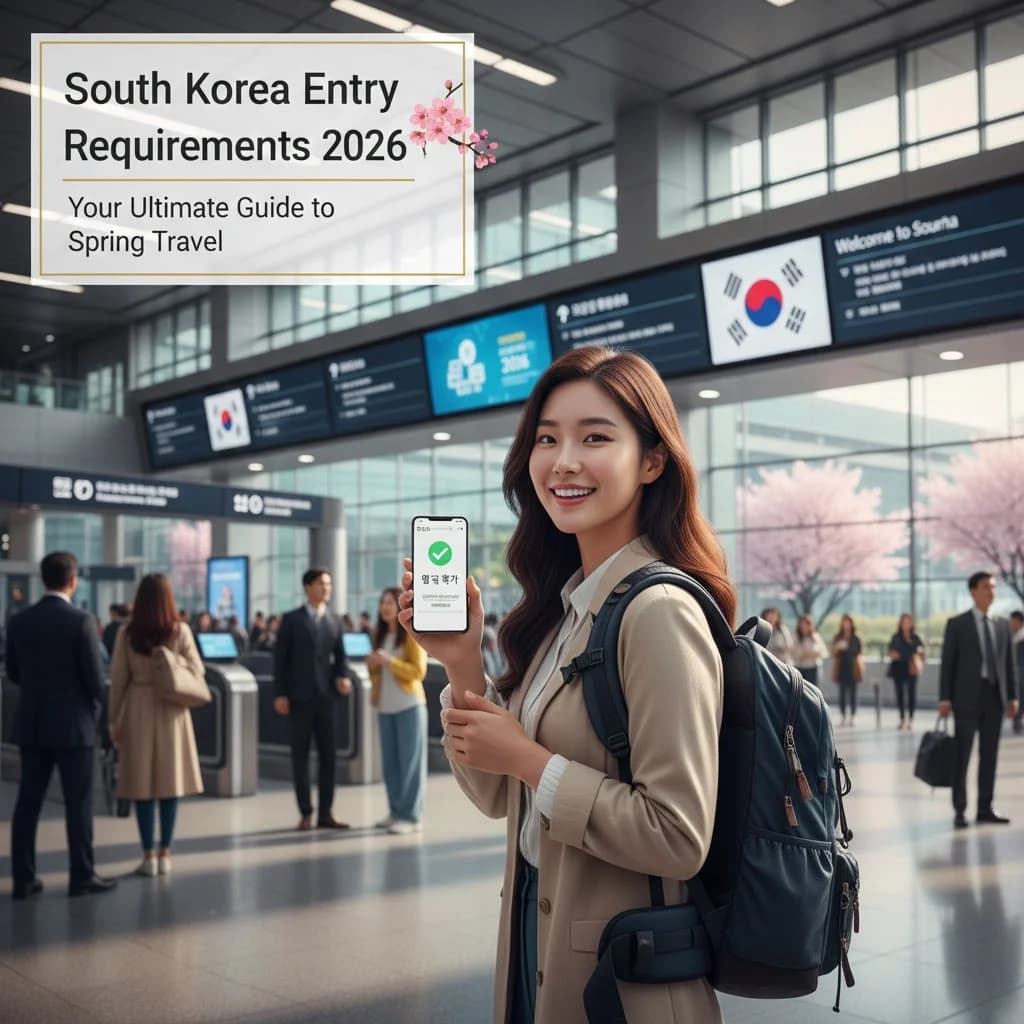
There's a unique kind of excitement that comes with planning a trip to see the cherry blossoms in Seoul or Busan. You can almost feel the buzz of the city, taste the street food, and see the vibrant colors. But then comes the practical side: navigating the ever-changing travel rules. For anyone dreaming of a spring trip, understanding the latest South Korea entry requirements 2026 is the first, most crucial step. The good news? Things have gotten significantly simpler, especially for those planning their South Korea spring trip 2026. The even better news? We will walk you through exactly what has changed, what has not, and how to ensure you are connected from the moment you land. Having a reliable connection is no longer a luxury; it is essential for a modern trip, and securing the best eSIM for South Korea travel 2026 before you fly is the smartest move you can make for a seamless travel to South Korea 2026 experience.
- Key South Korea Entry Requirements for 2026 Spring Travel
- K-ETA and Visa for South Korea in 2026: What Spring Travelers Need to Know
- Health and Safety Protocols for 2026 Spring Visitors
- Staying Connected During Your South Korea Spring Trip with Cellesim eSIM
- Choosing the Right Cellesim eSIM for Your 2026 South Korea Adventure
- Seamless eSIM Activation: Preparing for Your 2026 South Korea Arrival
- Comparing Connectivity Options for Your 2026 Spring Trip to South Korea
- Essential Spring Travel Tips for South Korea in 2026
- Frequently Asked Questions
South Korea eSIM Plans from $4.50
Skip the airport SIM queue. Join 50,000+ travelers who connect instantly with Cellesim.
Get Your South Korea eSIMKey South Korea Entry Requirements for 2026 Spring Travel
As of 2026, South Korea has largely returned to its pre-pandemic entry regulations, simplifying the process for international visitors. The focus remains on a streamlined and efficient entry, particularly welcoming the influx of tourists expected during the popular spring season. Understanding these core requirements will ensure a smooth start to your journey.
The primary requirements for most foreign nationals include a valid passport and, depending on your nationality, either a K-ETA (Korea Electronic Travel Authorization) or a traditional visa. These are crucial for both air and sea arrivals. It is important to check the specific requirements for your country of origin well in advance of your travel dates.
While general health screening measures are minimal, travelers should still be prepared for potential temperature checks or basic health declarations upon arrival. These are standard international travel practices and are implemented to maintain public health. Staying informed through official government channels is always advisable.
K-ETA and Visa for South Korea in 2026: What Spring Travelers Need to Know
For many nationalities, the K-ETA has become the standard entry document for short-term visits to South Korea without a traditional visa. This electronic authorization is mandatory for citizens of visa-free countries and allows for multiple entries over a two-year period, typically for stays of up to 90 days. The application process is entirely online and generally takes a few days to process, though it is recommended to apply several weeks before your trip, especially during peak travel times like spring.
Countries not eligible for visa-free entry or K-ETA will need to apply for a standard visa through a South Korean embassy or consulate in their home country. This process is more involved, requiring specific documentation and an interview. The type of visa required will depend on your purpose of visit, whether it is for tourism, business, or study.
It is critical to confirm whether you need a K-ETA or a visa based on your nationality. The official South Korean K-ETA portal provides an updated list of eligible countries and detailed application guidelines. Applying early helps mitigate any unexpected delays, ensuring your entry into South Korea is as straightforward as possible.
"Navigating entry requirements can seem complex, but with a K-ETA, the process for many travelers to South Korea is now remarkably simple and efficient."
Health and Safety Protocols for 2026 Spring Visitors
As of 2026, South Korea has lifted most of its pandemic-era health restrictions for international arrivals. This means travelers are generally not required to undergo mandatory quarantine, present proof of vaccination, or provide pre-departure PCR tests. However, maintaining good personal hygiene and being mindful of local health guidelines remain important, particularly in crowded areas popular during the spring cherry blossom season.
While not strictly mandated, carrying basic sanitization items and being aware of local emergency numbers is always prudent. South Korea has an excellent healthcare system, and travel insurance is strongly recommended to cover any unforeseen medical emergencies. For the latest health advisories, consulting the Korea Disease Control and Prevention Agency (KDCA) website is the most reliable source.
The focus on safety extends beyond health. South Korea is generally a very safe country for tourists, but standard precautions against petty crime, like pickpocketing in crowded tourist spots, are always wise. Using reliable transportation, staying aware of your surroundings, and securing your belongings will contribute to a safe and enjoyable spring trip.
Staying Connected During Your South Korea Spring Trip with Cellesim eSIM
In a country as technologically advanced as South Korea, seamless connectivity is not just a convenience; it is a necessity for navigating cities, translating menus, staying in touch with loved ones, and sharing your travel experiences. While enjoying the vibrant spring festivals or the serene beauty of cherry blossom parks, an eSIM from Cellesim ensures you are always online, without the hassle of traditional SIM cards.
Cellesim offers dedicated South Korea eSIM plans that provide instant mobile data upon arrival. This means no more searching for local SIM card vendors, dealing with language barriers, or worrying about losing your physical SIM. With an eSIM, you can activate your plan even before you leave home, guaranteeing connectivity the moment your plane lands at Incheon International Airport.
Beyond convenience, an eSIM often provides cost savings compared to international roaming charges from your home provider. It also allows you to keep your primary SIM active for calls and texts, offering the best of both worlds. For travelers seeking an efficient and modern solution for their 2026 South Korea spring trip, Cellesim offers reliable and high-speed internet access.
Choosing the Right Cellesim eSIM for Your 2026 South Korea Adventure
Selecting the ideal eSIM plan for your South Korea adventure depends on your travel duration and anticipated data usage. Cellesim offers a range of flexible plans designed to cater to various traveler needs, ensuring you get the right amount of data without overspending.
Consider how you will use your phone:
- Light usage: Primarily for maps, messaging, and occasional browsing.
- Moderate usage: Regular social media, some video streaming, and frequent navigation.
- Heavy usage: Extensive streaming, video calls, tethering, or work-related connectivity.
To help you estimate, our Smart Data Calculator can provide a tailored recommendation based on your planned activities. This ensures you buy only what you need for a truly connected 2026 spring trip.
Seamless eSIM Activation: Preparing for Your 2026 South Korea Arrival
Activating your Cellesim eSIM for your 2026 South Korea trip is a straightforward process that can be completed in minutes, often before you even depart. This eliminates any stress of finding connectivity upon arrival, allowing you to hit the ground running whether you are heading to a cherry blossom festival or exploring Seoul's vibrant districts.
Here is a simplified guide to activating your Cellesim eSIM:
- Purchase your eSIM: Visit cellesim.com/en/esim-south-korea and select the plan that best fits your travel needs.
- Receive QR code/activation details: An email containing a QR code or manual activation details will be sent to you immediately after purchase.
- Scan QR code: Go to your phone's Settings > Cellular/Mobile Data > Add eSIM/Add Data Plan and scan the QR code. Ensure you have a stable internet connection during this step. If scanning is not possible, you can enter the details manually.
- Label your eSIM: Name your new eSIM plan (e.g., "South Korea eSIM") for easy identification.
- Enable data roaming: Once in South Korea, ensure data roaming is turned ON for your Cellesim eSIM line. Make sure your primary SIM's data roaming is OFF if you do not want to incur charges.
For a detailed, step-by-step visual guide, our Interactive Setup Guide provides comprehensive instructions for various devices. Remember to activate your eSIM just before or upon arrival in South Korea to maximize your data plan's validity.
Find Your South Korea eSIM Plan
Comparing Connectivity Options for Your 2026 Spring Trip to South Korea
When planning your 2026 spring trip to South Korea, evaluating your connectivity options is key to a stress-free experience. Here is a comparison of eSIMs, local physical SIM cards, and international roaming:
| Option | Price (7 days, est.) | Convenience | Setup |
|---|---|---|---|
| Cellesim eSIM | From $4.50 | High (instant, digital) | Instant online |
| Local Physical SIM | $10-$20 | Moderate (airport/store visit) | Requires physical swap |
| International Roaming | $10-$15/day | High (automatic) | Automatic, but costly |
For spring travelers, especially those planning to move between cities or frequently use navigation and translation apps, the convenience of an eSIM is unmatched. You avoid queues at airports or local mobile stores, which can be particularly busy during peak seasons like cherry blossom viewing. The comparison of airport SIMs vs. eSIMs often highlights eSIM as the more efficient choice.
While local SIMs offer competitive pricing, the time spent acquiring and activating them can detract from your precious travel time. International roaming, while convenient, typically carries significantly higher per-data-unit costs, which can quickly accumulate. Cellesim eSIMs offer a balanced approach, combining ease of use with cost-effective data rates.
Essential Spring Travel Tips for South Korea in 2026
Making the most of your 2026 spring trip to South Korea involves more than just entry requirements and connectivity. Here are some practical tips to enhance your experience:
- Cherry Blossom Season: Spring in South Korea, typically late March to mid-April, is famous for cherry blossoms. Key viewing spots include Yeouido Park in Seoul, Gyeongju, and Jeju Island. Be aware that this is a popular time, so book accommodations and flights well in advance.
- Public Transportation: South Korea boasts an excellent public transport system, especially in major cities. Purchase a T-Money card upon arrival for seamless travel on subways and buses. Your Cellesim eSIM will be invaluable for navigating with apps like Naver Maps or KakaoMap.
- Weather: Spring weather can be variable, ranging from mild and sunny to cooler, rainy days. Pack layers, including a light jacket or umbrella, to be prepared for fluctuating temperatures.
- Local Apps: Download essential local apps beyond navigation, such as Papago for translation, KakaoTalk for messaging (widely used by locals), and local dining guides to discover hidden gems.
- Currency: The local currency is the South Korean Won (KRW). Credit cards are widely accepted, but it is useful to carry some cash for street food vendors or smaller shops.
For more detailed information on specific attractions or events during your spring visit, consider checking the official Korea Tourism Organization website.
Ready for Seamless Connectivity in South Korea?
Join 50,000+ travelers in 200+ countries. Set up your Cellesim eSIM in minutes.
Start Your Connected JourneyTrusted by travelers worldwide. 24/7 Support.
Frequently Asked Questions
Do I need a visa to enter South Korea in 2026?
Many nationalities can enter South Korea without a traditional visa for short stays, provided they obtain a K-ETA (Korea Electronic Travel Authorization) beforehand. Some countries are fully visa-exempt, while others still require a visa. Check your specific nationality's requirements on the official K-ETA portal.
Is the K-ETA still required for South Korea in 2026?
Yes, for citizens of most visa-free countries, the K-ETA remains a mandatory entry requirement for short-term visits to South Korea in 2026. It allows for multiple entries over a two-year period. It's recommended to apply several weeks before your travel date.
Are there any COVID-19 related entry restrictions for South Korea in spring 2026?
As of 2026, South Korea has lifted nearly all COVID-19 related entry restrictions, including mandatory quarantine, vaccination proof, and pre-departure testing. However, basic health screening or declarations may still be in place, so stay informed via official health authorities.
When is the best time to visit South Korea for spring travel?
The best time for spring travel, especially to see cherry blossoms, is typically from late March to mid-April. Specific peak dates can vary by region. This period often coincides with various spring festivals and pleasant weather, making it a popular time for tourists.
How do I stay connected in South Korea during my spring trip?
The most convenient option for staying connected is using an eSIM like Cellesim. You can purchase and activate your South Korea eSIM plan online before you travel, providing instant data upon arrival. This avoids the need for physical SIM cards and costly international roaming.
Can I use my Cellesim eSIM in other countries after visiting South Korea?
If you purchase a country-specific Cellesim eSIM for South Korea, it will typically only provide coverage within South Korea. For multi-country trips, Cellesim offers regional or global eSIM plans that cover multiple destinations, ensuring continuous connectivity as you travel.