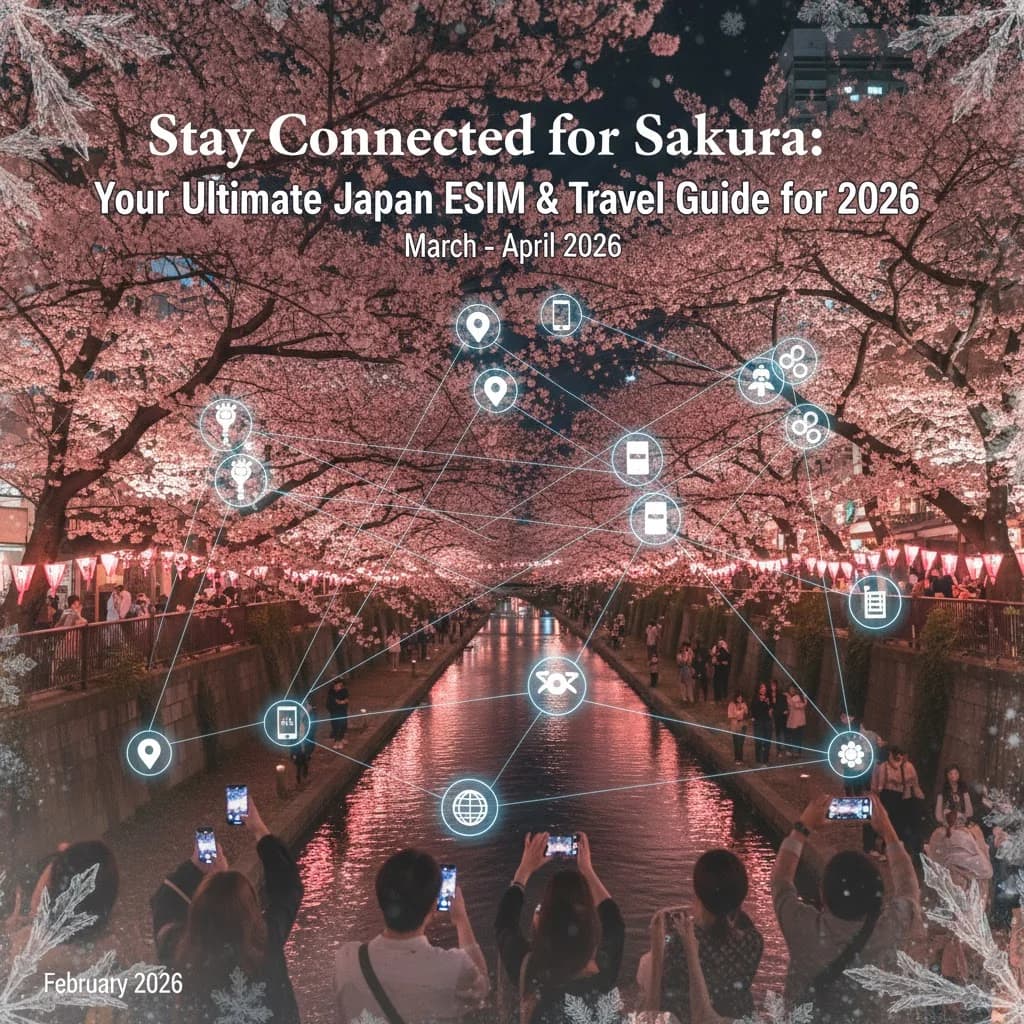
Imagine this: you’re standing under a canopy of delicate pink blossoms in Kyoto, the air is crisp, and the scene is perfect. You pull out your phone to look up the train schedule for your next photo spot, or maybe to find that tiny ramen shop a friend recommended, but you’re met with the dreaded “No Service” message. The magic of the moment fizzles into frustration. Japan’s cherry blossom season is breathtaking, but it’s also one of the busiest times to travel. Navigating packed trains, finding your way through sprawling cities, and making last-minute bookings all hinge on one thing: reliable internet. This guide is your key to a seamless experience, covering everything from predicting the blooms to ensuring your Japan eSIM for cherry blossom 2026 is active the second you land. We'll explore why having a solid data plan is the single most important tool in your travel kit and help you choose the best eSIM for international travel.
- Predicting the 2026 Sakura Bloom: Timing Your Visit Perfectly
- Why a Japan eSIM is Your Essential Sakura 2026 Companion
- Choosing the Right Cellesim Japan eSIM Plan for Cherry Blossom Season
- Seamless Connectivity for Sakura: Activating Your Japan eSIM Before You Land
- Navigating Japan's Bustling Cities During Sakura with Your eSIM
- Maximising Your Data: Tips for Social Media & Mapping During Sakura
- eSIM vs. Traditional Roaming: Best Value for Your 2026 Sakura Trip
- Frequently Asked Questions about Japan eSIMs for Sakura 2026
Japan eSIM Plans from $4.50 for Sakura 2026
Connect instantly in Japan and share your cherry blossom memories. Join 50,000+ happy Cellesim customers.
Get Your Japan eSIM for SakuraPredicting the 2026 Sakura Bloom: Timing Your Visit Perfectly
The ephemeral beauty of Japan's cherry blossoms is a major draw, but their timing is notoriously fickle, depending heavily on weather conditions. Bloom forecasts for 2026 typically begin in late winter, with official projections released by meteorological agencies. Generally, blossoms start appearing in the warmer southern regions of Kyushu around late March, progressing northwards to Hokkaido by early May. Peak bloom (mankai) in major cities like Tokyo, Kyoto, and Osaka usually occurs between late March and early April.
For a successful Sakura trip in 2026, flexibility is key. Monitor official Japan Meteorological Corporation or Japan Weather Association forecasts closer to your travel dates. These forecasts provide detailed bloom predictions for various cities, allowing you to adjust your itinerary if needed. Remember that full bloom lasts only about a week, so precise timing can enhance your experience significantly.
Why a Japan eSIM is Your Essential Sakura 2026 Companion
Travelling during Japan's busiest season demands seamless connectivity. From real-time navigation on crowded trains to translating menus in bustling eateries, your smartphone is indispensable. An eSIM eliminates the hassle of finding a physical SIM card upon arrival, which can be particularly challenging amidst airport crowds during peak Sakura season. With an eSIM, you land in Japan already connected, saving valuable time and stress.
Unlike traditional roaming, which can incur exorbitant fees, or local SIMs that require registration and a trip to a store, an eSIM offers convenience and cost-effectiveness. You can purchase and activate your plan before you even depart, ensuring you can immediately access maps, translation apps, and share your cherry blossom photos with family and friends.
Choosing the Right Cellesim Japan eSIM Plan for Cherry Blossom Season
Selecting the optimal eSIM plan for your 2026 Sakura trip depends on your data usage habits and trip duration. Cellesim provides various data packages tailored for different travel needs. Consider how much you'll rely on apps for navigation, social media, video calls, and research.
- Light User (1-3 GB): Ideal for occasional map look-ups, messaging, and quick social media updates over a short trip (e.g., 5-7 days).
- Moderate User (5-10 GB): Suitable for daily navigation, regular social media, some video streaming, and longer trips (e.g., 10-14 days).
- Heavy User (10+ GB or Unlimited): Perfect for extensive streaming, frequent video calls, working remotely, or if you plan to use eSIM tethering for other devices.
All Cellesim plans offer access to Japan's robust mobile networks, providing consistent speeds for a smooth online experience. Evaluate your itinerary: if you plan to visit multiple cities, a larger data plan might be more practical than repeatedly topping up smaller ones.
"Staying connected with my Cellesim eSIM meant I never missed a train or a blooming spot. It made navigating Kyoto's busy streets during Sakura a breeze." - A recent Cellesim traveler.
Seamless Connectivity for Sakura: Activating Your Japan eSIM Before You Land
The beauty of an eSIM lies in its simplicity and pre-departure setup. Here’s how to ensure your Cellesim Japan eSIM is ready for your 2026 Sakura adventure:
- Check Device Compatibility: First, confirm your smartphone supports eSIM technology. Most newer models from Apple, Samsung, Google, and other manufacturers are eSIM compatible. You can use our eSIM Checker to verify your device.
- Purchase Your eSIM: Visit cellesim.com/en/esim-japan and select the data plan that best suits your travel needs for Japan.
- Receive QR Code/Details: After purchase, you'll receive an email with a QR code or manual installation details. Keep this email accessible.
- Install eSIM Before Departure: We recommend installing the eSIM profile while you still have a stable internet connection, typically at home or your departure airport. Go to your phone's settings, find the "Add eSIM" or "Add Cellular Plan" option, and scan the QR code. You can find detailed steps in our complete eSIM setup guide.
- Activate Upon Arrival: Once you land in Japan, simply switch on your Cellesim eSIM line in your phone settings. It will automatically connect to a local network. Ensure data roaming is enabled for your eSIM profile, not your primary line.
This process means you avoid searching for Wi-Fi or local SIM card stores at the airport, allowing you to head straight to your first Sakura viewing spot.
Navigating Japan's Bustling Cities During Sakura with Your eSIM
Japan's public transport system is efficient but can be overwhelming, especially during the crowded Sakura season. Your eSIM-enabled phone becomes your indispensable guide. Real-time train schedules, platform numbers, and transfer information are crucial for navigating complex networks like the JR lines or Tokyo Metro.
Consider using apps like Google Maps or Japan Transit Planner (Jorudan or Hyperdia) for accurate public transport directions. These apps, powered by your Cellesim eSIM, can help you avoid delays and find alternative routes if trains are exceptionally busy. For those exploring beyond major cities, such as the Fuji Five Lakes region for stunning Mt. Fuji and cherry blossom views, reliable navigation is even more critical. You can also leverage translation apps to communicate effectively with locals, ensuring a smoother journey.
For more specific travel within Japan, especially during peak seasons, consider consulting the official Japan National Tourism Organization website for up-to-date travel advice and regional information. This will complement your connectivity, ensuring a well-rounded and informed trip.
Maximising Your Data: Tips for Social Media & Mapping During Sakura
During cherry blossom season, you'll undoubtedly want to capture and share every moment. Your eSIM data allows you to post high-quality photos and videos instantly, use live mapping, and stay connected without seeking Wi-Fi hotspots. To make the most of your data:
- Download Offline Maps: Before venturing out, download offline maps of areas you plan to visit. This reduces data usage for navigation.
- Adjust App Settings: Configure social media apps to upload photos/videos at a slightly lower quality if data conservation is a priority. Disable auto-play for videos.
- Monitor Usage: Regularly check your data usage through your phone's settings or the Cellesim portal. This helps you understand your consumption and decide if a top-up is needed.
- Wi-Fi for Heavy Tasks: Use public or hotel Wi-Fi for large downloads, video calls, or extensive streaming to save your eSIM data for when you need it most on the go.
For an estimate of how much data you might need, our Smart Data Calculator can provide a tailored recommendation based on your typical usage.
eSIM vs. Traditional Roaming: Best Value for Your 2026 Sakura Trip
When planning your 2026 trip to Japan for Sakura, understanding your connectivity options and their costs is essential. Here's a comparison to help you make an informed decision:
| Option | Price (7 days) | Speed | Setup |
|---|---|---|---|
| Cellesim eSIM | From $4.50 | Full 4G/5G | Instant, Pre-trip |
| Carrier Roaming | $10-15/day | Throttled/Variable | Automatic (often costly) |
| Local Physical SIM | $15-30 | Full Speed | Airport store visit, Activation |
As the table illustrates, traditional carrier roaming can quickly become the most expensive option, with daily charges that accumulate rapidly. Local physical SIM cards offer good value but require time and effort upon arrival to purchase and activate, which can be inconvenient during a busy Sakura trip. Cellesim eSIMs provide a balance of affordability, convenience, and performance, allowing you to connect instantly upon landing with clear, upfront pricing. Our Roaming Savings Calculator can further highlight the potential cost benefits.
Ready for a Connected Sakura Journey in 2026?
Don't let connectivity issues dim the magic of Japan's cherry blossom season. Secure your Cellesim eSIM now and ensure a seamless, connected experience from the moment you land.
Start Your Connected JourneyTrusted by 50,000+ travelers worldwide. 24/7 Support.
Frequently Asked Questions about Japan eSIMs for Sakura 2026
When is the best time to see cherry blossoms in Japan in 2026?
Peak cherry blossom bloom (mankai) in major cities like Tokyo, Kyoto, and Osaka typically falls between late March and early April. However, specific dates vary year-to-year based on weather. It's advisable to check official Japan Meteorological Corporation forecasts closer to your travel dates for the most accurate predictions.
Can I use my Cellesim Japan eSIM for all my devices?
A Cellesim Japan eSIM is installed on a single compatible smartphone. However, you can use your phone's personal hotspot feature (tethering) to share your data connection with other devices like laptops or tablets, provided your plan allows it and your phone supports the feature.
Is 4G/5G connectivity available everywhere in Japan during Sakura season?
Major cities and tourist areas in Japan generally have excellent 4G and increasingly 5G coverage from leading network providers. Cellesim partners with these local networks to offer reliable connectivity. While coverage is robust, very remote areas or specific indoor locations might have varying signal strength, especially with the high volume of visitors during Sakura.
What if I run out of data on my Cellesim Japan eSIM during my trip?
If your data runs low, you can easily top up your Cellesim Japan eSIM plan directly from the Cellesim website or app. This allows you to purchase additional data packages quickly and continue enjoying seamless connectivity without interruption, even in the middle of your Sakura viewing.
Do I need to activate my Japan eSIM before arriving in Japan?
We recommend installing your Cellesim eSIM profile before you depart from home, while you have a stable internet connection. However, the eSIM will only activate and connect to a local network once you arrive in Japan and enable the eSIM line in your phone's settings. This ensures you're connected the moment you land.
Will my phone be compatible with a Cellesim Japan eSIM for my 2026 trip?
Most modern smartphones, typically those released after 2018, are eSIM compatible. This includes many models from Apple, Samsung, Google Pixel, and others. You can quickly check your device's compatibility using the Cellesim eSIM Checker on our website before purchasing a plan.