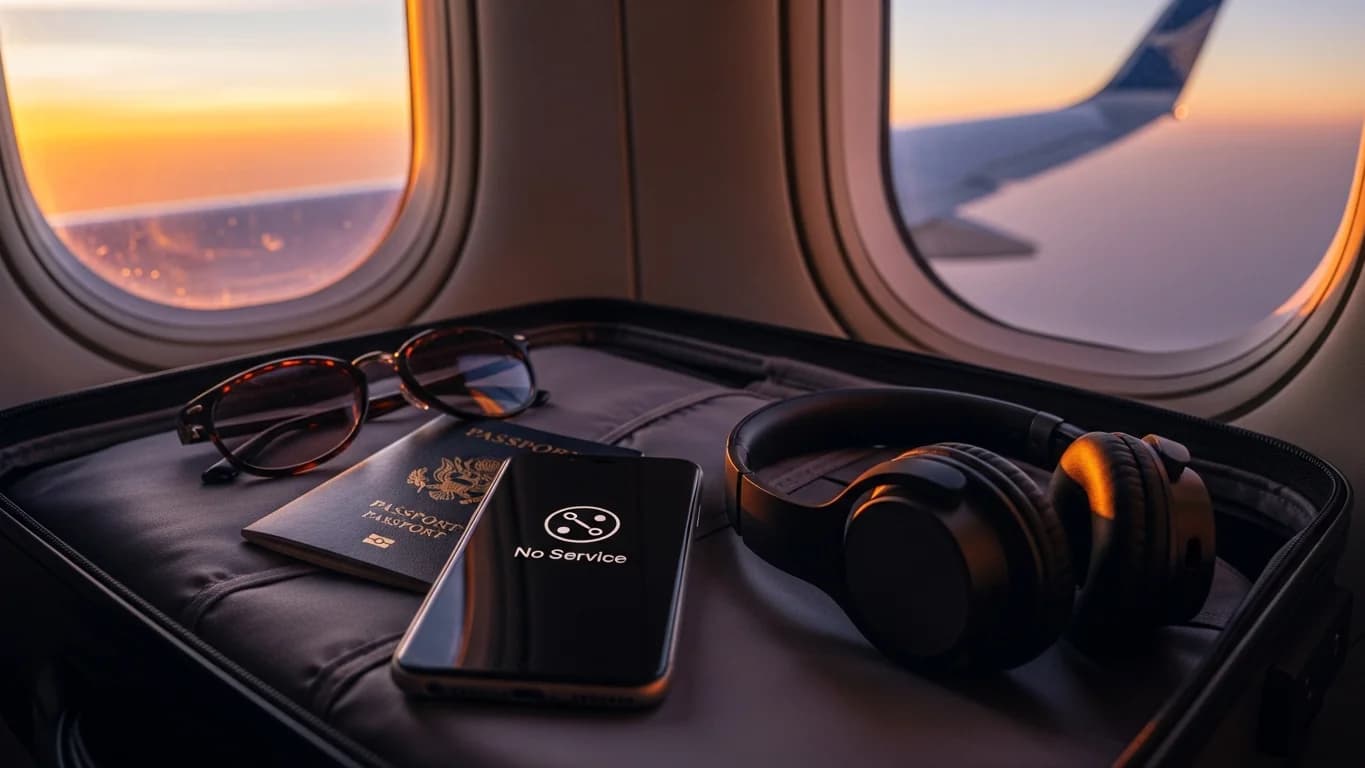
We have all experienced it. You step off the plane into the warm, unfamiliar air of a new country. The excitement is palpable. You pull out your phone to message family, book a rideshare, or load a map to your hotel, and then you see it: “No Service.” That small, simple message can trigger a wave of connectivity anxiety. Suddenly, you’re disconnected and vulnerable. Finding the best way to get internet when traveling abroad isn't just a convenience anymore; it's an essential part of modern travel. It’s your map, your translator, your lifeline, providing crucial mobile data for navigation, communication, and safety. With numerous choices, the path to staying connected can feel as confusing as navigating a foreign subway system. For most travellers today, the answer lies in understanding your options, and for many, the ultimate solution is the eSIM.
- The Connectivity Conundrum: Why Staying Online Matters Abroad
- Exploring Your Options: Traditional Connectivity Methods
- Introducing eSIMs: The Modern Solution for Global Travel
- How Cellesim eSIMs Deliver Seamless International Connectivity
- Choosing the Right Cellesim eSIM Plan for Your International Trip
- Activating Your Cellesim eSIM: A Step-by-Step Guide
- Cost Comparison: eSIM vs. Roaming vs. Local SIM
- Pro Tips for Optimal Connectivity When Traveling Abroad
- Frequently Asked Questions
Connect Instantly in 200+ Countries with Cellesim
Eliminate roaming fees and enjoy reliable internet from the moment you land. Join 50,000+ happy customers worldwide.
Get Your Global eSIMThe Connectivity Conundrum: Why Staying Online Matters Abroad
In the past, travelling meant disconnecting. Today, it is nearly impossible to imagine a trip without constant access to information and communication. From navigating unfamiliar streets to translating menus, checking reviews, and sharing experiences with loved ones, a reliable internet connection is fundamental to a smooth and enjoyable journey. Consider a few scenarios where connectivity is paramount:
- Navigation: GPS apps like Google Maps are indispensable for finding your way in a new city, whether walking, driving, or using public transport.
- Communication: Messaging apps allow you to stay in touch with family and friends, coordinate with travel companions, and make emergency calls.
- Information: Instant access to translation tools, local recommendations, weather updates, and flight changes ensures you are always informed.
- Safety: In an emergency, being able to call for help or access vital information can be critical.
The anxiety of "no service" is real, impacting everything from practical logistics to overall travel enjoyment. This guide explores the best ways to get online when you are far from home, focusing on convenience, cost-effectiveness, and reliability.
Exploring Your Options: Traditional Connectivity Methods
Before the advent of eSIMs, travellers primarily relied on a few established methods, each with its own set of advantages and drawbacks. Understanding these traditional options provides context for why newer technologies like eSIMs are gaining traction.
Traditional Roaming: Convenience at a High Cost
Using your home network's roaming service is often the default for many. It offers unparalleled convenience as your phone automatically connects to local networks upon arrival. There is no setup required, and you keep your original phone number. However, this convenience comes at a significant financial cost. Roaming charges can accumulate rapidly, with data, calls, and texts often priced far above local rates. Many travellers have returned home to find unexpectedly large phone bills, turning a memorable trip into a costly one.
"I once used roaming for a week-long trip to the US, thinking it would be easy. My bill was over £200. I learned my lesson about checking data rates the hard way."
Local SIM Cards: A Budget-Friendly Option with Hassle
Purchasing a local SIM card upon arrival in a new country has long been a popular alternative to roaming. It provides access to local rates, which are typically much cheaper than international roaming. You receive a new local number and can often find plans with generous data allowances. However, the process involves several steps:
- **Finding a Vendor:** Locating a phone shop or kiosk at the airport or in the city.
- **Language Barriers:** Communicating your needs in a foreign language.
- **Registration:** Many countries require passport registration, which can be time-consuming.
- **Physical Swap:** Removing your home SIM and inserting the new one, with the risk of losing your original card.
- **Number Change:** You temporarily lose access to your primary phone number, which can complicate receiving calls or texts.
While often more economical, the initial hassle and the temporary loss of your primary number can be deterrents for some travellers, especially those on shorter trips or visiting multiple countries.
Public Wi-Fi: Free but Risky
Reliance on free public Wi-Fi networks in cafes, hotels, and airports is another common strategy. While free, these networks are often slow, unreliable, and, critically, insecure. Public Wi-Fi is a prime target for cybercriminals, making personal banking, sensitive communications, and data vulnerable. Moreover, you are restricted to areas with Wi-Fi access, limiting your connectivity on the go. For secure and consistent internet, public Wi-Fi should only be used for non-sensitive tasks.
Introducing eSIMs: The Modern Solution for Global Travel
The emergence of eSIM (embedded SIM) technology has fundamentally changed how we approach international connectivity. An eSIM is a digital SIM that allows you to activate a cellular plan from a carrier without needing a physical SIM card. It is built directly into your device, offering unparalleled flexibility and convenience for travellers.
With an eSIM, you can purchase a data plan for your destination online, activate it with a QR code or manual settings, and be connected within minutes, all before you even land. This eliminates the need for physical SIM swaps, dealing with local vendors, or incurring exorbitant roaming fees.
How Cellesim eSIMs Deliver Seamless International Connectivity
Cellesim offers a comprehensive range of eSIM plans designed specifically for international travellers. Our service focuses on providing reliable, high-speed data across a vast global network, ensuring you remain connected wherever your adventures take you.
- Global Coverage: Cellesim provides connectivity in over 200 countries and regions. Whether you are exploring ancient ruins in Italy or conducting business in Japan, you can rely on our network.
- Instant Activation: Purchase your eSIM plan online and receive an activation QR code almost instantly. The setup process is quick and intuitive, allowing you to connect moments after landing. For a detailed guide, refer to our complete eSIM setup guide.
- Cost-Effective: Cellesim plans are designed to be significantly more affordable than traditional roaming, offering transparent pricing without hidden fees. You choose the data package that fits your needs, from short-term travel to extended stays.
- Keep Your Primary Number: Unlike local physical SIMs, an eSIM allows you to retain your primary SIM for calls and texts while using the eSIM for mobile data. This means you can still receive important calls from home without switching numbers.
- Flexible Plans: We offer a variety of data packages, from specific country plans like eSIM Italy to regional and global options, ensuring you find a plan perfectly suited to your itinerary and data requirements. Our plans come with varying validity periods, from 7 days to 30 days or more.
Cellesim’s mission is to remove connectivity worries, letting you focus on the joys of international travel.
Choosing the Right Cellesim eSIM Plan for Your International Trip
Selecting the ideal eSIM plan depends on several factors, including your destination, duration of travel, and anticipated data usage. Cellesim simplifies this choice with flexible options.
Consider Your Destination
If you are travelling to a single country, a dedicated country-specific eSIM plan (e.g., eSIM Indonesia) often provides the best value and local network access. For multi-country trips within a specific region, a regional eSIM plan can cover multiple nations under one package, saving you the hassle of purchasing multiple SIMs. For extensive trips across different continents, our Global eSIM Plan offers unparalleled reach.
Estimate Your Data Needs
Your data usage determines the size of the plan you should purchase. Consider your typical online activities:
- Light User (1-3 GB): Occasional messaging, email, light browsing, map usage.
- Moderate User (5-10 GB): Regular social media, navigation, some video streaming, voice calls via apps.
- Heavy User (10+ GB): Frequent video streaming, online gaming, tethering other devices, extensive use of social media and video calls.
To help you estimate, Cellesim offers a Smart Data Calculator on our website, which can provide a personalised recommendation based on your travel habits. It is generally safer to slightly overestimate your data needs to avoid running out unexpectedly.
Plan Duration and Validity
Match the validity period of your eSIM plan to your trip duration. Cellesim offers plans ranging from 7 days to 30 days or more. Activating your eSIM just before your departure or upon arrival ensures you make the most of your plan's validity. Avoid activating too early if your plan has a fixed validity period.
Activating Your Cellesim eSIM: A Step-by-Step Guide
One of the significant advantages of Cellesim eSIMs is the straightforward activation process. You can set up your eSIM in minutes, usually by scanning a QR code.
Before You Travel
- Check Compatibility: Ensure your smartphone or tablet supports eSIM technology. You can use our eSIM checker to confirm.
- Purchase Your Plan: Visit cellesim.com, select your destination and data package, and complete your purchase.
- Receive Activation Details: You will receive an email containing a QR code and manual installation instructions.
Installation Steps (Upon Arrival or Before Departure)
- Open Settings: On your device, navigate to 'Settings' > 'Cellular' or 'Mobile Data'.
- Add eSIM: Look for an option like 'Add eSIM' or 'Add Data Plan'.
- Scan QR Code: Use your phone's camera to scan the QR code provided in your Cellesim email. If scanning is not possible, select 'Enter Details Manually' and input the information.
- Label Your eSIM: Give your new eSIM a clear label, such as "Travel eSIM" or "Cellesim [Country Name]", to easily distinguish it from your primary line.
- Choose for Data: When prompted, select your newly installed eSIM for cellular data usage. Keep your primary SIM active for calls and texts if desired.
- Enable Data Roaming: For the eSIM to function correctly, ensure 'Data Roaming' is enabled for the eSIM profile in your settings. This is standard for eSIMs to connect to local networks and does not incur extra charges from Cellesim.
For visual guidance, Cellesim provides an interactive setup guide tailored to various devices. We recommend installing your eSIM before you travel, especially if you anticipate limited Wi-Fi upon arrival. However, only activate it when you are ready to start using the data plan, particularly if it has a strict validity period.
Cost Comparison: eSIM vs. Roaming vs. Local SIM
To illustrate why Cellesim eSIMs are often the best way to get internet when traveling abroad, consider a typical 7-day trip. Prices are approximate and can vary by carrier and country.
| Option | Approx. Cost (7 days) | Data Speed | Setup Hassle | Keep Home Number |
|---|---|---|---|---|
| Cellesim eSIM | From $4.50 (e.g., 1GB) | Full 4G/5G | Instant (Online) | Yes |
| Traditional Roaming | $70 - $150+ | Throttled/Variable | None (Automatic) | Yes |
| Local Physical SIM | $15 - $30 | Full 4G/5G | Moderate (Store Visit) | No |
As this comparison highlights, eSIMs offer a compelling balance of cost-effectiveness, convenience, and functionality, especially when compared to the high costs of roaming or the logistical challenges of obtaining a local SIM.
Pro Tips for Optimal Connectivity When Traveling Abroad
Maximising your internet experience abroad involves more than just choosing the right plan. Here are some practical tips to ensure seamless connectivity throughout your journey:
- Download Offline Maps: Before you leave Wi-Fi, download maps of your destination using apps like Google Maps. This saves data and ensures navigation even without an active connection.
- Use Wi-Fi for Heavy Tasks: Whenever possible, use secure Wi-Fi networks for large downloads, software updates, or extensive video streaming. This preserves your eSIM data for when you truly need it on the go.
- Monitor Data Usage: Most smartphones allow you to track your data consumption within the settings. Keep an eye on it to avoid running out prematurely. Cellesim also provides tools to manage and top up your plan.
- Turn Off Auto-Updates: Disable automatic app updates and background app refresh on your device while using cellular data abroad. These can consume significant data without your knowledge.
- Consider a Portable Charger: Constant internet usage, especially with navigation and streaming, can drain your phone's battery quickly. A portable power bank is an essential accessory for any traveller.
- Secure Your Connection: If you must use public Wi-Fi, consider using a Virtual Private Network (VPN) for an added layer of security.
Ready for Seamless Connectivity on Your Next Trip?
Say goodbye to roaming worries and hello to effortless global internet access. Connect instantly with Cellesim.
Start Your Connected JourneyTrusted by 50,000+ travellers in 200+ countries. 24/7 support.
Frequently Asked Questions
Is an eSIM really the best way to get internet when traveling abroad?
For most modern travellers, an eSIM is highly recommended as the best way to get internet abroad due to its convenience, cost-effectiveness compared to roaming, and flexibility. It allows you to connect instantly in a new country without needing to swap physical SIM cards.
Can I keep my original phone number with an eSIM?
Yes, one of the major advantages of using an eSIM from Cellesim is that you can keep your primary physical SIM card active for calls and texts while using the eSIM solely for mobile data. This means you won't miss important calls or messages on your usual number.
How do I know if my phone is compatible with an eSIM?
Most newer smartphone models from Apple, Samsung, Google, and others are eSIM compatible. You can quickly check your device's compatibility using Cellesim's eSIM checker tool on our website, or by looking up your phone's specifications online. Devices like iPhone 11 onwards and many recent Android flagships support eSIM.
When should I activate my Cellesim eSIM plan?
You can purchase and install your Cellesim eSIM plan before you even leave home. However, it is generally best to activate the data plan (turn on the eSIM line for cellular data) either just before you depart or once you land at your destination. This ensures you maximise the validity period of your chosen plan.
What if I run out of data on my Cellesim eSIM while abroad?
If your data runs low, Cellesim offers easy top-up options directly through your account. You can purchase additional data packages as needed, ensuring continuous connectivity throughout your trip without interruption. You will usually receive notifications as your data usage approaches its limit.
Are Cellesim eSIMs secure to use for international travel?
Yes, Cellesim eSIMs are secure. They use the same encrypted network infrastructure as traditional physical SIM cards. Unlike public Wi-Fi networks which can be unsecured, using a Cellesim eSIM for your mobile data provides a private and more reliable connection for your online activities while travelling.