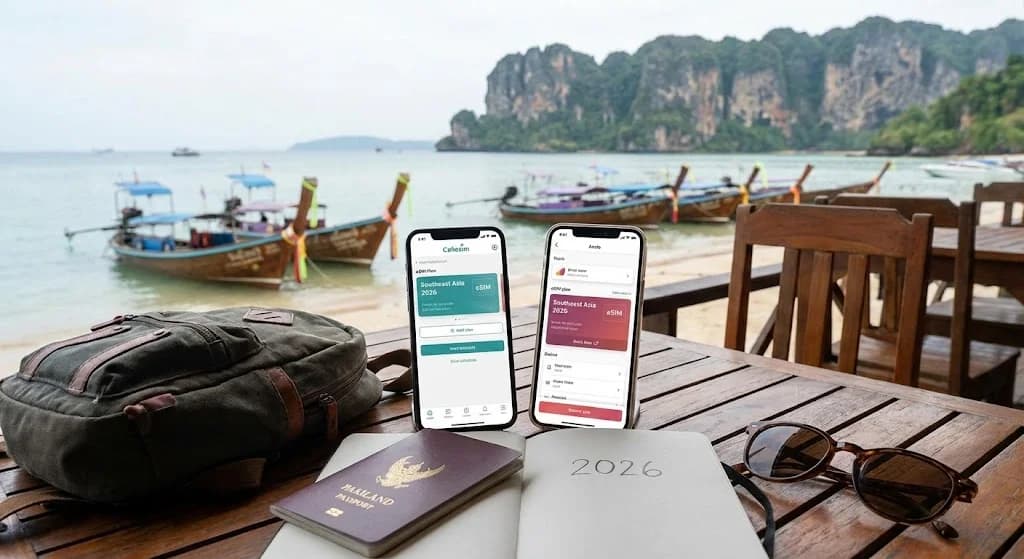
You’ve just stepped off a 14-hour flight into the warm, humid air of Bangkok's Suvarnabhumi Airport (BKK). The signs are in a script you don’t recognize, and you desperately need to book a Grab to your hotel. You pull out your phone, but your home carrier shows 'No Service' and the airport Wi-Fi is asking for a local phone number you don't have. This is the moment of truth for your travel connectivity. In this crucial moment, the eSIM you chose beforehand becomes your lifeline. But which one? For your 2026 Southeast Asia adventure, the decision often boils down to a major showdown: Cellesim vs. Airalo. This guide will dissect exactly what each service offers, going beyond marketing to provide practical, on-the-ground insights. We'll help you choose the best eSIM for seamless, stress-free connectivity across the vibrant streets of Hanoi, the pristine beaches of the Philippines, or the bustling markets of Kuala Lumpur.
- Quick Comparison: Cellesim vs. Airalo for Southeast Asia (2026 Snapshot)
- Future-Proofing Your Connectivity: What to Expect in Southeast Asia in 2026
- Cellesim's Connectivity Advantage in Southeast Asia for 2026
- Airalo's Marketplace Approach for 2026 Southeast Asia Travel
- Direct Comparison: Cellesim vs. Airalo Performance in 2026 SEA
- Real-World Connectivity: Scenarios for Your 2026 Southeast Asia Trip
- Evaluating User Experiences: Cellesim and Airalo's Reputations
- Choosing Your Ideal eSIM for Seamless Southeast Asia Travel
- Frequently Asked Questions
Connect Instantly Across 20 Countries in Asia
Seamless data for your entire Southeast Asia journey. Join 50,000+ happy travelers with Cellesim.
Get Your Asia eSIMQuick Comparison: Cellesim vs. Airalo for Southeast Asia (2026 Snapshot)
Before we delve into the specifics, here’s a high-level overview of how Cellesim and Airalo compare for your Southeast Asian adventure in 2026, focusing on key aspects that matter to travelers.
| Feature | Cellesim | Airalo |
|---|---|---|
| Primary Focus | Reliability & Support | Variety & Low Prices |
| Coverage Model | Curated Tier-1 network partners | Marketplace with numerous network options |
| Regional Plan | Comprehensive Asia plan, ideal for multi-country trips | Multiple regional plans with varying country lists |
| Pricing Philosophy | Transparent, value-focused for premium service | Often lowest entry price, variable plan quality |
| Ease of Use | Simple QR code activation, clear instructions | Slick app-based experience, requires in-app management |
| Customer Support | 24/7 human support via chat and email | Primarily chatbot and ticket-based system |
| Overall Reliability | High, consistent performance | Variable, depends on specific plan/carrier |
Future-Proofing Your Connectivity: What to Expect in Southeast Asia in 2026
As we advance into 2026, the digital infrastructure across Southeast Asia continues its rapid evolution. Major urban centers like Bangkok, Kuala Lumpur, and Hanoi are significantly expanding their 5G networks, promising even faster speeds and lower latency. This translates to seamless high-definition streaming, quicker uploads of your travel content, and ultra-reliable navigation for discovering local attractions.
However, for many adventurers, Southeast Asia is not solely about city exploration. It encompasses remote islands in the Philippines, challenging treks through the mountains of Northern Thailand, or navigating the iconic Ha Giang Loop in Vietnam. While widespread 5G might not reach every corner of these picturesque but isolated areas, 4G/LTE coverage is becoming increasingly robust. The critical factor for 2026 travel will be selecting an eSIM provider that strategically partners with local carriers known for their extensive geographical reach, not just their urban speeds. Both Cellesim and Airalo aim to capitalise on these advancements, but their underlying strategies for securing reliable connections across diverse geographical and infrastructural landscapes will be a deciding factor for your 2026 Southeast Asia travel eSIM experience. Understanding these regional trends helps discerning travelers prepare for optimal connectivity throughout their journey. For more detailed insights into global network performance, consult independent analyses like those from OpenSignal or explore the broader impact of eSIM technology on travel from GSMA.
Cellesim's Connectivity Advantage in Southeast Asia for 2026
Cellesim positions itself as a reliable travel partner, meticulously designed to prevent connectivity frustrations during your 2026 journey through Southeast Asia. Rather than overwhelming you with numerous confusing options, Cellesim focuses on offering a curated selection of high-quality, dependable eSIM plans. With coverage in over 200 countries and a track record of serving 50,000+ satisfied customers, Cellesim demonstrates a commitment to global reliability and robust service.
Curated Network Coverage and Performance: This is where Cellesim establishes a significant advantage for 2026 travel in Southeast Asia. The quality of the underlying local network makes a tangible difference, especially when you venture beyond bustling city centers. Opting for a budget carrier often means your connection degrades or disappears the moment you leave major urban hubs like Bangkok or Kuala Lumpur. Cellesim circumvents this by partnering directly with the top-tier mobile operators in each country. For instance, in Thailand, you are typically connected to the AIS network, renowned for its extensive nationwide coverage, even extending to remote islands and upcountry regions. In Vietnam, it utilizes Viettel, a state-owned provider celebrated for its robust network that reaches into rural areas like the Ha Giang Loop, providing essential connectivity for navigation and emergencies. In the Philippines, expect connections with leading carriers, ensuring you remain connected whether island hopping or exploring Manila. This selective approach ensures consistent speeds and reliable 4G/LTE or 5G connectivity where available. Such performance is crucial for everyday travel needs, including using ride-hailing apps like Grab, accessing online maps, managing accommodation bookings, and making stable video calls home. This focus on premium local partners ensures Cellesim offers a truly reliable connectivity solution for your Southeast Asia travel in 2026.
Optimized Plan Structure and Transparent Pricing: Cellesim provides both single-country eSIMs and a comprehensive regional plan, specifically tailored for the dynamic travel patterns anticipated in 2026. The Asia Regional eSIM is particularly well-suited for classic backpacking routes through Southeast Asia, covering key destinations like Thailand, Vietnam, Cambodia, Malaysia, Singapore, Indonesia, and the Philippines within a single, seamless package. Pricing is straightforward and transparent; the advertised price is what you pay, free from hidden activation fees or surprise taxes. While some providers might offer a marginally cheaper 1GB plan, Cellesim prioritizes overall value, ensuring that the data you purchase is delivered on a premium, reliable network. This approach minimizes frustrations and unexpected costs, positioning Cellesim as a strong contender for the best eSIM for Southeast Asia in 2026.
User-Centric Experience and Responsive Support: The Cellesim user experience prioritizes simplicity. From browsing the website to activating your eSIM, the process is designed to be intuitive for all travelers, regardless of their tech proficiency. Instructions are clear and concise. Should you encounter an issue, you are not redirected to a complex series of chatbots. Cellesim offers 24/7 support from real human agents who possess a deep understanding of the technology and the urgency of a traveler needing immediate assistance. This human-centric support is a significant differentiator when you are in a foreign country and require a quick, clear resolution, particularly for complex itineraries. Before making a purchase, you can easily check if your device is eSIM compatible directly on the Cellesim website, further streamlining your preparations for your 2026 trip. This commitment to a user-friendly experience and robust support reinforces Cellesim's strong position in the Southeast Asia eSIM market.
A Deep Dive into Cellesim's Southeast Asia Offering for 2026
Think of Cellesim as your reliable travel partner for 2026. The entire philosophy is built around preventing that 'uh-oh' moment at Suvarnabhumi Airport or deep within the Ha Giang Loop. Instead of offering hundreds of confusing options, Cellesim focuses on providing a handful of high-quality, dependable plans that just work. Cellesim boasts coverage in over 200 countries and serves over 50,000 satisfied customers, showcasing a proven track record of global reliability.
Network Coverage and Performance Across Southeast Asia
This is where Cellesim truly shines for 2026 travel in Southeast Asia. The quality of the local network makes a world of difference, particularly when you venture beyond bustling city centres. Being on a budget carrier can mean your connection drops the second you leave a major city like Bangkok or Kuala Lumpur. Cellesim partners directly with the top-tier mobile operators in each country. For example, in Thailand, you'll likely be on the AIS network, known for having the best nationwide coverage, even on remote islands and upcountry regions. In Vietnam, it’s Viettel, the state-owned provider with a famously robust network that extends into rural areas like the Ha Giang Loop, providing crucial connectivity for navigation and emergencies. In the Philippines, expect connections with leading carriers ensuring you stay connected whether you're island hopping or exploring Manila. This curated approach means you get consistent speeds and reliable 4G/LTE or 5G connectivity where available, which is essential for using Grab, accessing maps, managing bookings, and making video calls home. This focus on premium local partners ensures Cellesim offers a truly reliable southeast asia travel esim 2026 solution.
Plan Structure and Pricing for Your 2026 Southeast Asia Itinerary
Cellesim offers both single-country eSIMs and a comprehensive regional plan specifically tailored for the dynamic travel patterns of 2026. The Asia Regional eSIM is particularly well-suited for the classic backpacking route through Southeast Asia, covering countries like Thailand, Vietnam, Cambodia, Malaysia, Singapore, Indonesia, and the Philippines in one seamless package. The pricing is straightforward and transparent, what you see is what you pay, with no hidden activation fees or taxes tacked on at the end. While you might find a cheaper 1GB plan elsewhere, Cellesim competes on value, ensuring the data you pay for is delivered on a premium, reliable network. This means fewer frustrations and unexpected charges, making it a strong contender for the best esim southeast asia 2026. The activation process is also refreshingly simple; you get a QR code via email, and our interactive setup guide walks you through the 2-minute process, allowing you to be connected before you even leave Suvarnabhumi Airport.
The Cellesim User Experience for 2026 Travelers
The goal is simplicity. From the moment you land on the website to activating your eSIM, the process is designed to be intuitive for everyone, not just the tech-savvy. Instructions are clear, and if you do run into an issue, you’re not funneled into a labyrinth of chatbots. Cellesim offers 24/7 support from real humans who understand the technology and the urgency of a traveler needing to get online. This human touch is a significant differentiator when you're in a foreign country and just need a quick, clear answer, especially for complex itineraries in 2026. Before you even buy, you can easily check if your phone is eSIM compatible right on our site, streamlining your preparation for your 2026 trip. This commitment to user-friendly experience and robust support solidifies Cellesim's position in the cellesim southeast asia review.
Pros & Cons of Cellesim for SEA in 2026
- Pros:
- Connects to the best local networks (e.g., AIS in Thailand, Viettel in Vietnam) for superior speed and reliability across Southeast Asia in 2026.
- Excellent, responsive 24/7 human customer support, providing peace of mind for urgent travel needs.
- Transparent pricing with no hidden fees, offering clear value.
- Streamlined regional plans perfect for multi-country trips across Southeast Asia, simplifying connectivity management.
- Cons:
- May not always have the absolute lowest price for very small data packages, focusing instead on overall value and reliability.
- Fewer individual plan options compared to a marketplace model, but curated for optimal performance.
Unpacking Airalo's Approach to Southeast Asia in 2026
Airalo operates on a different model. It's best understood as a massive eSIM marketplace. They offer a staggering number of plans from various providers across the globe, all accessible through a slick, well-designed mobile app. This approach has made them a popular choice, especially among budget-conscious travelers seeking an airalo southeast asia esim for 2026. Many Airalo southeast Asia reddit threads often discuss the variety and cost-effectiveness.
Network Coverage and Roaming Partners for 2026 Travel
As a marketplace, Airalo’s coverage is extensive, and you can find an eSIM for almost any country in Southeast Asia, including popular destinations like Thailand, Vietnam, and the Philippines, as well as less frequently visited spots. However, the quality of that coverage can be a mixed bag. The performance of your Airalo eSIM depends entirely on the specific plan you buy and its underlying local network partner, which isn't always transparent upfront. One plan for Thailand might use the excellent AIS network, while another, cheaper one might use a smaller carrier with spottier coverage outside of Bangkok. This variability is the core trade-off of the marketplace model when choosing an airalo se asia plan. This is a key difference when comparing providers in other regions like Europe as well, or when considering airalo vs holafly south america.
The Airalo App and Plan Marketplace for Southeast Asia 2026
Airalo's biggest strength is its app. It’s a one-stop shop where you can browse, purchase, install, and top-up your eSIMs without ever leaving the application. For travelers who are comfortable with managing everything on their phone and appreciate a wide selection, this is a huge plus. Their regional plan, Asialink, covers a good number of countries, which can be convenient for a multi-country Southeast Asia adventure in 2026, but it's always worth double-checking the list to ensure it matches your specific itinerary perfectly. The Airalo southeast Asia plans are generally well-received for their convenience and breadth of choice.
Pricing and Promotions for Your 2026 Southeast Asia Budget
If you're searching for the cheapest possible data plan for a short trip, you'll often find it on Airalo. Their business model thrives on volume, offering very low entry prices for 1GB or 3GB plans, which are frequently mentioned in airalo southeast asia reviews. They also frequently run promotions and have a loyalty program ('Airmoney') that offers credits on future purchases, making it appealing for repeat users. The catch, as mentioned, is that the lowest price might come with compromises on network quality or speed throttling, so it's important to read the details of each plan carefully, particularly for critical 2026 travel connectivity. It's also wise to figure out how much data you'll actually need to avoid having to top up frequently at less favorable rates, which can quickly erase any initial savings.
Pros & Cons of Airalo for SEA in 2026
- Pros:
- Huge selection of plans for nearly every country in Southeast Asia, offering flexibility for diverse 2026 itineraries.
- Often has the lowest prices for small, short-duration data packages, appealing to budget-conscious travellers.
- Excellent, user-friendly mobile app for browsing, purchasing, and managing eSIMs, streamlining the user experience.
- Cons:
- Network quality and speed can be inconsistent depending on the specific plan chosen and its underlying local partner.
- Customer support is primarily automated, with potentially slower response times for complex issues, which can be frustrating in a foreign country.
- Less transparency about which local network you'll be using, making it harder to predict performance, a common concern in airalo southeast asia reddit discussions.
Head-to-Head: Key Differences That Matter for 2026 Southeast Asia Travel
So, how do these differences play out on the ground for your 2026 journey? Let's break down the core Cellesim vs Airalo debate into the factors that will most impact your Southeast Asia trip.
Coverage Quality vs. Quantity for 2026 Connectivity
This is the most critical distinction. Airalo offers quantity; Cellesim offers quality. With Airalo, you might have five different eSIM options for Vietnam. One might be fantastic, another might be slow, and a third might not work well outside of Hanoi or Ho Chi Minh City. The burden is on you to figure out which is which. Cellesim removes that guesswork. By pre-selecting the best network partner in each country, they ensure a baseline of high performance. This matters less if you're just staying in a resort in Bali, but it's crucial if you're motorbiking through northern Thailand, trying to navigate the bustling streets of Kuala Lumpur, or exploring remote areas of the Philippines and need reliable Google Maps and Grab. While Cellesim focuses on the best providers in each country, they also offer strong options globally, as seen in Cellesim's plans for South Korea and other major destinations. For the best esim southeast asia 2026 experience, quality often trumps sheer volume of options.
Customer Support: When Things Go Wrong on Your 2026 Adventure
Imagine your eSIM doesn't activate upon landing in Manila or you lose connection in a remote part of the Ha Giang Loop. With Cellesim, which boasts 24/7 human support, you can connect to the airport Wi-Fi or any available hotspot and start a live chat with a human who can troubleshoot with you in real-time. With Airalo, your first line of defense is a chatbot, followed by a ticketing system. While their support team is helpful, the process can take longer, which is incredibly stressful when you're stuck without data in a foreign country. For first-time eSIM users or anyone who isn't comfortable tinkering with network settings, Cellesim's accessible, expert human support is a significant advantage for your 2026 Southeast Asia travel.
Pricing Philosophy: Value vs. Volume for Your 2026 Southeast Asia Budget
Airalo's model is built on attracting customers with eye-catchingly low prices. This is great for a weekend trip where connectivity is a nice-to-have. Cellesim's pricing reflects a 'peace of mind' premium. You're paying for the assurance that your connection will be fast and stable, and that help is immediately available if you need it. It's also important to look beyond the sticker price and understand what 'unlimited' data really means, as many cheap plans come with aggressive throttling after a certain usage cap. For a comprehensive multi-country Southeast Asia adventure in 2026, consistent, reliable data often offers better overall value, even if the initial cost is slightly higher.
Regional Plan Nuances for 2026 Multi-Country Journeys
Both providers offer regional plans, but the devil is in the details. Cellesim's Asia plan is curated for the most common travel flows across Southeast Asia, making it an ideal multi-country esim southeast asia 2026 solution. Airalo's Asialink plan is also comprehensive, but sometimes their country groupings can be less intuitive for a specific route. Always check the included country list carefully against your 2026 itinerary, especially if you're visiting less common combinations of countries. For a classic 4-week Thailand-Laos-Cambodia-Vietnam trip, Cellesim’s regional plan is often a more seamless fit, allowing you to cross borders like from Thailand to Vietnam without needing to switch or top up individual country plans. This convenience is invaluable for 2026's dynamic travelers.
Real-World Scenarios: Cellesim vs. Airalo in Southeast Asia's Diverse Landscapes for 2026
Let's consider how Cellesim and Airalo might perform in specific 2026 Southeast Asia travel scenarios. Imagine you're landing at Suvarnabhumi Airport in Bangkok. With Cellesim, your pre-activated eSIM seamlessly connects you to AIS, Thailand's top network, allowing you to instantly hail a Grab or check into your hotel. If you're using Airalo, you might connect to a less robust network, or face potential issues with activation if the plan you chose relies on a smaller local provider, leading to immediate frustration. Or picture yourself navigating the winding roads of the Ha Giang Loop in northern Vietnam. Cellesim, leveraging Viettel's extensive rural coverage, will likely maintain a stronger, more consistent signal, vital for GPS and emergency communication. An Airalo plan, depending on its specific local partner, might struggle in these more remote areas, leaving you without essential connectivity. Similarly, when island hopping in the Philippines, consistent connectivity from Cellesim's premium partners can make the difference between effortlessly booking ferries and constantly searching for Wi-Fi. For crucial connectivity in bustling cities like Kuala Lumpur, or during your multi-country esim southeast asia 2026 adventure, these real-world performance differences highlight the true value proposition of each provider.
Comparing User Reviews and Reputations for 2026 Southeast Asia Travel
When planning for 2026, looking at
Pros & Cons of Cellesim for SEA in 2026
- Pros:
- Connects to top-tier local networks (e.g., AIS in Thailand, Viettel in Vietnam) for superior speed and reliability across Southeast Asia.
- Provides excellent, responsive 24/7 human customer support, offering peace of mind for urgent travel needs.
- Features transparent pricing with no hidden fees, delivering clear value for premium service.
- Offers streamlined regional plans perfect for multi-country trips across