Updated: 2026-02-16
Imagine this: you've just landed at Tokyo's Narita airport after a 12-hour flight. You're tired, slightly disoriented, and all you want to do is let your family know you've arrived safely and figure out the train to your hotel. But your phone shows "No Service." Now begins the familiar, frustrating scavenger hunt for a SIM card kiosk, deciphering plans in a foreign language, and fumbling with a tiny ejector tool while juggling your luggage. This single moment is a core reason why the conversation around eSIM vs travel SIM for international travelers has shifted dramatically. For modern globetrotters, instant, hassle-free connectivity isn't a luxury; it's essential. This guide breaks down exactly why embedded SIM technology is becoming the default choice and will help you determine the best eSIM for international travel based on your needs, ensuring you avoid excessive roaming charges and maintain seamless connectivity.
- The Airport Arrival Test: eSIM vs. Physical SIM for International Travelers
- eSIM Technology: The Modern Solution for Global Connectivity
- Traditional Travel SIM Cards: Navigating the Physical Option Abroad
- Direct Comparison: eSIM vs. Travel SIM Features for Your International Journey
- Cost and Convenience: A Traveler's Financial Showdown
- Installation and Activation: Seamless Setup for Your Overseas Trip
- Maintaining Connectivity Across Borders: Flexibility for Multi-Country Travel
- Choosing Your Champion: When to Pick an eSIM or a Physical SIM for Your Next Trip
- Frequently Asked Questions
Stay Connected Globally with Cellesim eSIM
Skip the airport SIM queue and connect instantly in 200+ countries. Join 50,000+ happy travelers.
View Global eSIM PlansThe Airport Arrival Test: eSIM vs. Physical SIM for International Travelers
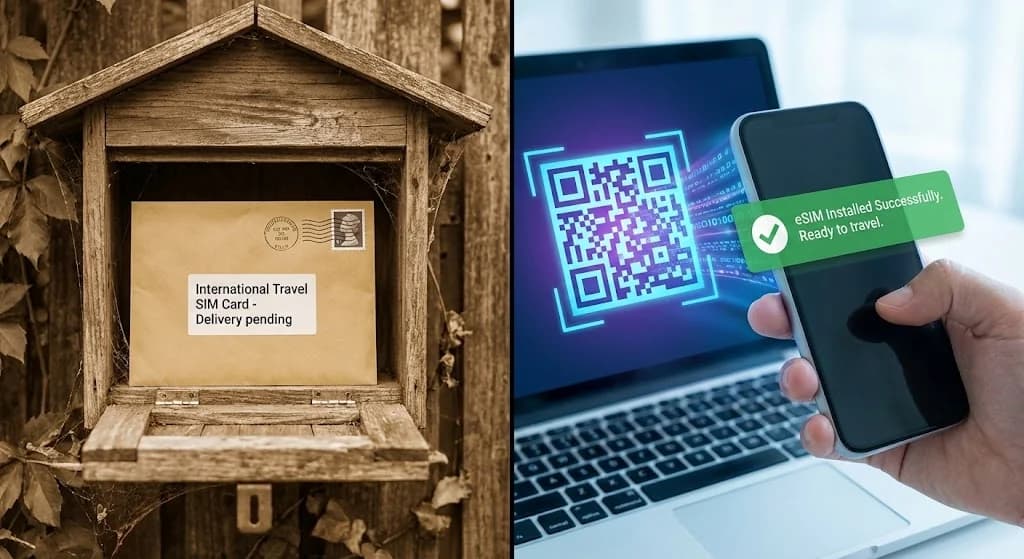
The moment you step off the plane in a foreign country, the immediate need for internet access becomes clear. Checking maps, ordering a ride-share, or simply reassuring loved ones are often urgent priorities. This initial scramble sets the stage for the eSIM vs. physical travel SIM debate. With a traditional SIM, you often face queues, language barriers, and the hassle of physical installation. This can be particularly stressful after a long flight, especially if you arrive late at night when kiosks might be closed. The alternative, relying on expensive international roaming plans from your home provider, often leads to unexpected bill shock upon return.
eSIM technology was designed to eliminate these friction points. By allowing you to purchase and activate a data plan digitally, often before you even depart, it transforms the airport arrival experience. Your phone is connected the moment you land, giving you immediate access to navigation, communication, and information without any physical interaction or delay.
eSIM Technology: The Modern Solution for Global Connectivity
An eSIM, or embedded Subscriber Identity Module, is a small chip built directly into your smartphone, tablet, or smartwatch. Unlike traditional SIM cards, an eSIM is not physical and does not need to be swapped out. Instead, it allows you to download and activate cellular plans digitally. This means you can store multiple eSIM profiles on a single device and switch between them as needed, making it an ideal solution for international travelers.
For international travelers, eSIM offers unparalleled convenience. You can purchase a data plan for your destination country or region online, receive a QR code, and activate it within minutes. This process can be completed from the comfort of your home before your trip, on the plane, or upon arrival, providing immediate internet access without needing a local SIM card vendor or Wi-Fi connection for activation after initial setup.
"The shift to eSIM for international travel is about regaining control and simplicity. No more fumbling with tiny cards or worrying about losing your home SIM."
Traditional Travel SIM Cards: Navigating the Physical Option Abroad
Before eSIMs gained prominence, physical travel SIM cards were the go-to solution for avoiding exorbitant roaming charges. These are prepaid plastic cards that you insert into your phone's SIM tray, providing you with a local phone number and data plan for your destination country. While they still offer a viable way to connect, they come with several considerations for international travelers.
- Availability: You typically purchase these at airports, local convenience stores, or mobile operator shops upon arrival. This often means waiting in line and potentially dealing with language barriers.
- Physical Handling: You need to remove your home SIM card and insert the new one, requiring a SIM ejector tool. It is easy to misplace your primary SIM during this process.
- Device Lock: Your phone must be unlocked to accept a foreign SIM card. Many phones purchased on contract are carrier-locked, which can prevent you from using a travel SIM.
- Single Country Focus: Most travel SIMs are country-specific. If your itinerary includes multiple countries, you would need to repeat the purchase and installation process at each new destination, which quickly becomes cumbersome.
While physical SIMs provide local rates, the logistical challenges often outweigh the benefits for travelers seeking seamless, multi-country connectivity.
Direct Comparison: eSIM vs. Travel SIM Features for Your International Journey
To provide a clear picture for international travelers, let's compare the key features of eSIM and traditional travel SIM cards across several important metrics.
| Feature | Cellesim eSIM | Physical Travel SIM | Home Roaming |
|---|---|---|---|
| Setup Speed | Instant (digital) | Up to 30 mins (physical store) | Automatic |
| Installation | QR code/App | Manual swap (physical) | None |
| Physical Card | No | Yes | No |
| Dual SIM Use | Yes (keep home SIM) | No (replaces home SIM) | Yes (via home SIM) |
| Multi-Country Plans | Yes, regional/global | Rarely | Yes (often expensive) |
| Cost (typical) | Low-moderate | Low-moderate | High |
| Purchasing | Online, pre-trip | Local store, on arrival | Automatic |
| Flexibility | High (switch plans easily) | Moderate (single plan) | Low (fixed rates) |
This table illustrates that for most international travelers, the eSIM offers a more streamlined and flexible experience, especially when considering the ease of setup and multi-country support.
Cost and Convenience: A Traveler's Financial Showdown
The primary motivation for many international travelers to consider alternatives to home roaming is cost. Roaming charges from traditional carriers can quickly accumulate, turning a casual trip into an expensive one. Understanding the financial implications of eSIMs versus physical travel SIMs is crucial.
- eSIM Costs: Cellesim offers competitive pricing, with plans starting from just $4.50. You purchase a specific data package (e.g., 1GB, 5GB, 10GB) for a set duration (e.g., 7 days, 30 days). This upfront payment ensures there are no hidden fees or unexpected charges. You know exactly what you're paying for and what you're getting. Many providers, including Cellesim, also offer regional or global plans, which can be more cost-effective than buying individual country SIMs for multi-destination trips.
- Physical Travel SIM Costs: Local SIM cards can also be inexpensive, often ranging from $10-$30 for a decent data allowance. However, these prices might not include activation fees or registration processes that take additional time. The real cost can escalate when you factor in the time spent acquiring them, potential transport to a phone store, and the inconvenience of repeated purchases if you visit multiple countries.
- Roaming Charges: This is almost always the most expensive option. While convenient, international roaming can cost $10-15 per day, or even more, for limited data. Over a week-long trip, this quickly surpasses the cost of an eSIM or local SIM, offering significantly less data for your money. For a detailed comparison, explore our Roaming Savings Calculator.
In terms of convenience, eSIMs lead by enabling digital purchase and activation from anywhere, at any time. This saves precious travel time and reduces stress, allowing you to focus on your trip rather than connectivity logistics.
Instant Setup
Get connected in minutes
200+ Countries
Global coverage wherever you go
50,000+ Users
Trusted by international travelers
Installation and Activation: Seamless Setup for Your Overseas Trip
The ease of getting connected is a major differentiator for international travelers weighing their options. This is where eSIMs truly shine.
- eSIM Activation:
- Purchase: Select your desired plan on the Cellesim website, for example, an eSIM for Italy.
- Receive: After purchase, you receive an email with a QR code and detailed instructions.
- Install: Go to your phone's settings (usually under Cellular/Mobile Data), tap "Add eSIM" or "Add Data Plan," and scan the QR code.
- Activate: Follow the on-screen prompts to label your eSIM and set it as your data line. Your connectivity begins almost immediately.
- Physical Travel SIM Activation:
- Purchase: Find a local mobile store or airport kiosk.
- Registration: Present your passport for identity verification, a common requirement in many countries.
- Installation: Open your phone's SIM tray using an ejector tool, remove your home SIM, and insert the new local SIM.
- Configuration: Sometimes manual APN settings are required, which can be challenging if instructions are in a foreign language.
For the modern international traveler, the digital simplicity of eSIM activation offers a clear advantage, allowing for immediate connectivity upon arrival without any physical fuss.
Maintaining Connectivity Across Borders: Flexibility for Multi-Country Travel
Many international travelers undertake multi-country tours, making seamless connectivity across borders a significant concern. This is another area where the eSIM versus physical SIM debate reveals a clear winner.
- eSIM for Multi-Country Travel: With an eSIM, you can purchase regional plans that cover multiple countries (e.g., an eSIM for Europe or a global plan). This means you travel seamlessly from one country to the next within the covered region without needing to buy a new SIM or change settings. Your data connection simply switches to the strongest supported network. Furthermore, you can store multiple eSIM profiles on your phone, allowing you to easily switch between a European plan and an Asian plan with a few taps, all while keeping your primary SIM active for calls and texts from home. This flexibility makes eSIM the preferred choice for extensive international itineraries.
- Physical SIM for Multi-Country Travel: If you are using a physical travel SIM, it is usually country-specific. Crossing a border typically means your local SIM loses service, and you would need to find a new local SIM in the next country. This involves repeating the entire purchase, installation, and registration process multiple times throughout your trip, adding significant hassle and potential downtime to your journey. While some larger providers offer "travel SIMs" that work across multiple countries, their coverage and data allowances are often more limited and expensive than dedicated regional eSIM plans.
The ability to effortlessly move between countries with continuous data access firmly positions eSIM as the superior option for international travelers with dynamic itineraries. The International Telecommunication Union (ITU) reports a steady increase in international tourism, underscoring the demand for flexible cross-border connectivity. Learn more about global connectivity trends from the ITU.
Choosing Your Champion: When to Pick an eSIM or a Physical SIM for Your Next Trip
The "ultimate showdown" between eSIM and physical travel SIM ultimately depends on your specific travel style and priorities as an international traveler. Here's a breakdown to help you decide:
- Choose an eSIM if you:
- Prioritize convenience and immediate connectivity upon arrival.
- Plan to visit multiple countries and desire seamless transition between them.
- Want to keep your primary phone number active for calls/texts while using a separate data plan.
- Prefer managing your connectivity digitally, without physical SIM cards or ejector tools.
- Own a modern smartphone that supports eSIM technology. (You can check your device compatibility with Cellesim's eSIM Checker.)
- Are a business traveler who needs constant, reliable access from the moment you land. Find more tailored advice in our eSIM for Business Travelers guide.
- Consider a Physical Travel SIM if you:
- Are traveling to a single country for an extended period.
- Have an older phone model that does not support eSIM.
- Are comfortable with the process of purchasing and installing a physical SIM card at your destination.
- Need a local phone number for calls within the country more than data, and local SIMs offer very low-cost call packages.
- Are exploring remote areas where local providers might offer specific, niche physical SIM options that aren't yet available as eSIMs (though this is increasingly rare).
For the vast majority of international travelers seeking modern, efficient, and cost-effective connectivity, eSIMs present a compelling and increasingly standard solution. They simplify travel, reduce stress, and ensure you remain connected to the world as you explore it.
Ready for Seamless Connectivity on Your Next Journey?
Join 50,000+ travelers connecting instantly in 200+ countries with Cellesim.
Start Your Connected JourneyTrusted by travelers worldwide. 24/7 Support: [email protected]
Frequently Asked Questions
Can I keep my original phone number with an eSIM?
Yes, absolutely. One of the major advantages of an eSIM for international travelers is the ability to maintain your primary SIM for calls and texts while using your eSIM for data. This means you can receive important messages or calls from home without incurring roaming data charges.
Is an eSIM cheaper than a physical travel SIM?
Generally, eSIMs from providers like Cellesim offer very competitive rates, often matching or beating local physical SIM prices, especially when considering the convenience. For multi-country travel, regional eSIM plans are often significantly more cost-effective than buying multiple physical SIMs or relying on expensive home roaming.
How do I know if my phone is eSIM compatible?
Most newer smartphone models (from 2018 onwards) are eSIM compatible. This includes iPhones, Samsung Galaxy, Google Pixel, and Huawei devices. You can easily check your device's compatibility by visiting Cellesim's eSIM Compatible Devices page or by checking your phone's settings under "Cellular" or "Mobile Data" for an "Add eSIM" option.
Do I need an internet connection to activate my eSIM?
Yes, you typically need an active internet connection (Wi-Fi or existing cellular data) to download the eSIM profile onto your device initially. Once downloaded and installed, the eSIM itself will provide your data connection. Cellesim recommends activating your eSIM before you travel or using airport Wi-Fi upon arrival for initial setup.
What happens if I run out of data on my eSIM plan?
If your Cellesim eSIM data runs out, you will usually receive a notification. You can then easily top up your existing plan or purchase a new one directly from the Cellesim website or app, often within minutes, allowing you to continue your journey without interruption.
Can I use my eSIM for tethering or creating a hotspot?
Yes, most Cellesim eSIM plans support tethering, allowing you to share your data connection with other devices like laptops or tablets. This feature makes eSIMs even more versatile for international travelers who need to stay productive on the go. Always check the specific plan details for confirmation, as some local physical SIMs might restrict this feature. For more details, explore our eSIM Tethering Guide.