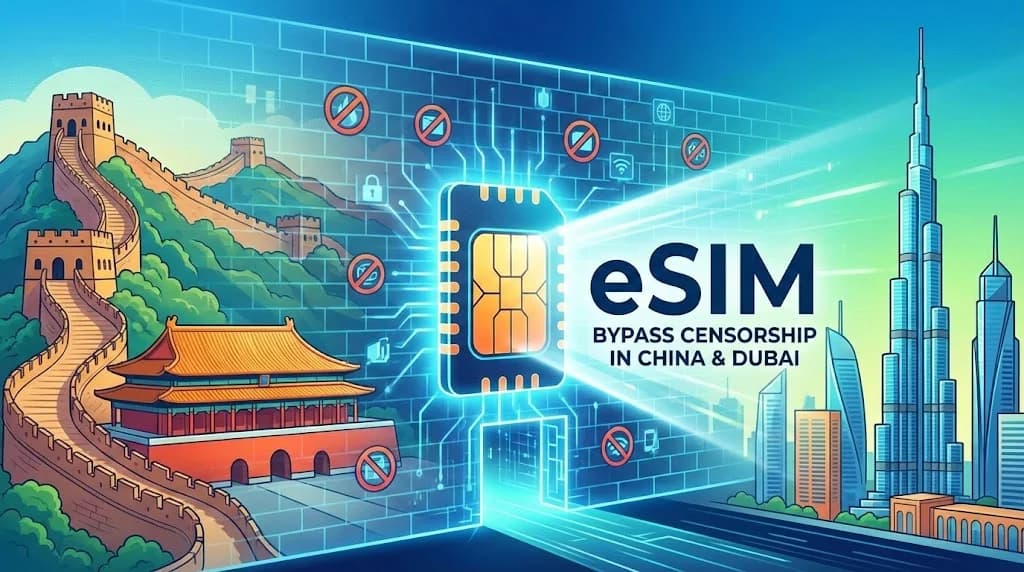
Navigating the digital landscape in certain countries can be challenging due to internet censorship and content restrictions. Travelers to destinations like China and Dubai often face limitations on accessing popular international services, social media platforms, and communication apps. This can disrupt travel planning, business operations, and personal connections.
Fortunately, an innovative solution exists: the eSIM. By understanding how an international eSIM from Cellesim can effectively bypass these digital barriers, you can ensure seamless and unrestricted connectivity throughout your journey. This guide will walk you through the specifics of internet censorship in these regions and demonstrate how Cellesim eSIMs provide a robust, reliable, and straightforward path to staying connected.
- The Challenge: Understanding Internet Censorship in China and Dubai
- Why Cellesim eSIMs Offer a Unique Solution for Censorship Bypass
- Selecting the Ideal Cellesim Plan for China or Dubai
- Activating Your eSIM: A Step-by-Step Guide to Unrestricted Access
- Optimizing Your Connectivity in Restricted Regions
- eSIM vs. VPNs & Local SIMs: The Best Approach for Bypass
- Practical Tips for Staying Connected in China and the UAE
- Frequently Asked Questions
Connect Freely in China & Dubai with Cellesim
Experience unrestricted internet access, essential for travel and business. Join 50,000+ happy customers connecting across 200+ countries.
View China & Middle East PlansThe Challenge: Understanding Internet Censorship in China and Dubai
Before exploring solutions, it is crucial to understand the nature of internet censorship in these two prominent travel destinations. While both countries implement restrictions, their approaches and targets differ significantly.
Internet Censorship in China: The Great Firewall
China operates one of the most sophisticated censorship systems globally, commonly known as the Great Firewall. This system blocks access to a vast array of international websites and services, including:
- Google services (Search, Gmail, Maps, YouTube)
- Popular social media platforms (Facebook, Instagram, Twitter, WhatsApp)
- Many international news outlets and streaming services
- Certain VPN protocols
The primary aim is to control information flow and maintain social stability within its digital borders. Travelers using local SIM cards or public Wi-Fi within mainland China will invariably encounter these restrictions, making it difficult to communicate with friends and family, access work tools, or even navigate using familiar apps.
Internet Censorship in Dubai and the UAE
In the United Arab Emirates (UAE), including the popular city of Dubai, internet censorship is less extensive than in China but still significant. The primary focus is on regulating Voice over Internet Protocol (VoIP) services and content deemed inappropriate or offensive under local laws and cultural norms. Key restrictions include:
- Blocked VoIP apps: While WhatsApp messaging works, voice and video calls are often restricted without a specific workaround. Services like Skype and FaceTime can also be affected.
- Blocked websites: Content related to gambling, pornography, criticism of the government, or certain religious and political topics is inaccessible.
These restrictions can particularly impact business travelers who rely on video conferencing and tourists wishing to make cost-effective calls home. Local SIM cards purchased in the UAE will also be subject to these limitations.
Why Cellesim eSIMs Offer a Unique Solution for Censorship Bypass
Traditional methods of staying connected abroad, such as relying on public Wi-Fi or purchasing local SIM cards, often fall short when encountering censorship. Public Wi-Fi is rarely secure and always subject to local network restrictions, while local SIMs are intrinsically tied to the domestic internet infrastructure.
This is where Cellesim eSIMs provide a distinct advantage. Unlike local SIMs, international eSIMs from providers like Cellesim operate as global roaming services. When you use a Cellesim eSIM, your device connects to local networks in China or Dubai, but your internet traffic is routed through Cellesim's secure global network, which is based outside these countries.
This routing mechanism means that your device essentially "looks" like it is accessing the internet from a less restricted region, thereby bypassing the local censorship filters. You gain access to:
- Google services, social media, and international news sites in China.
- Reliable VoIP services for voice and video calls in Dubai.
- All your essential communication and productivity apps without interruption.
The technology works by providing you with an IP address from a non-restricted location, effectively making the Great Firewall or UAE's content filters transparent to your connection. This makes it a powerful tool for travellers and business professionals who require uninterrupted access to the global internet.
"An international eSIM isn't just about data convenience; it's about digital freedom, especially when navigating restrictive internet environments abroad."
Selecting the Ideal Cellesim Plan for China or Dubai
Cellesim offers a variety of eSIM plans designed to cater to different travel needs. When traveling to China or Dubai, selecting the right plan involves considering data usage, duration, and whether you need regional coverage.
For China Travel
For seamless connectivity within mainland China, specifically designed plans are available that ensure you bypass the Great Firewall. These plans often cover not only mainland China but also Hong Kong and Macao, offering flexibility if your itinerary includes these regions.
Consider your expected data usage. If you rely heavily on navigation, social media, video calls, and streaming, opt for a larger data package (e.g., 10GB or 20GB). For lighter usage, smaller packages may suffice.
Recommended Plan: China Mainland, HK & Macao eSIM
For Dubai and UAE Travel
Dubai, as part of the UAE, is covered by Cellesim's Middle East regional plans or specific UAE country plans. These plans ensure your internet traffic bypasses the VoIP restrictions, allowing you to use apps like WhatsApp for calls without issue.
Again, assess your data requirements. Business travelers might need more data for video conferences and email, while tourists might use less, primarily for maps, social media, and messaging.
Recommended Plan: Middle East 11 Countries eSIM
Factors to Consider When Choosing a Plan:
- Data Volume: Estimate your daily usage. Our Smart Data Calculator can help you determine how much data you might need for typical travel activities.
- Validity Period: Match the plan's duration (e.g., 7, 15, or 30 days) to your trip length.
- Coverage: Ensure the plan covers your specific destinations. Regional plans offer convenience if you are visiting multiple countries within the Middle East, for instance.
- Top-up Options: All Cellesim plans offer easy top-ups if you unexpectedly run low on data. You can manage this directly from your account.
Activating Your eSIM: A Step-by-Step Guide to Unrestricted Access
Setting up your Cellesim eSIM is a straightforward process, designed to provide instant connectivity. It is highly recommended to complete the installation before you depart, while you still have access to a stable internet connection.
For detailed instructions, refer to our comprehensive eSIM installation guide, but here is a brief overview:
- Purchase Your eSIM: Select your desired plan for China or Dubai from the Cellesim website. You will receive a QR code and installation details via email.
- Install the eSIM Profile:
- iPhone: Go to Settings > Cellular/Mobile Data > Add eSIM. Scan the QR code or enter details manually.
- Android: Go to Settings > Network & internet > SIMs > Add eSIM. Scan the QR code or enter details manually.
Name your eSIM line (e.g., "Cellesim China") for easy identification.
- Configure Settings (Pre-Departure):
- Turn off "Turn On This Line" for your Cellesim eSIM until you arrive at your destination.
- Ensure your primary SIM remains active for calls and texts if you wish to keep your number.
- Disable data roaming for your primary SIM to avoid unexpected charges.
- Activate on Arrival: Once you land in China or Dubai, simply go to your phone settings, select your Cellesim eSIM, and switch on "Turn On This Line" and enable "Cellular Data" for it. Ensure "Data Roaming" is also enabled for the Cellesim line if prompted (this is normal for eSIMs).
- Test Connectivity: Open a browser or an app like Google Maps to confirm you have unrestricted internet access.
Optimizing Your Connectivity in Restricted Regions
While a Cellesim eSIM provides a robust solution for bypassing censorship, a few additional practices can further enhance your experience and ensure stable, fast internet.
Network Selection and Performance
In both China and Dubai, Cellesim partners with leading local network providers to ensure the best possible coverage and speed. Your device will automatically connect to the strongest available network. However, if you encounter slow speeds or connection drops, you can manually try switching network operators in your phone settings.
For China, major carriers include China Mobile, China Unicom, and China Telecom. In Dubai and the UAE, Etisalat and Du are the primary providers. Cellesim connects to the best available network from its partnerships.
Data Management and Usage
Even with unrestricted access, it is wise to manage your data usage, especially if you have a limited data plan. Streaming high-definition video or large file downloads can consume data quickly. Consider:
- Downloading maps and content offline before you leave.
- Adjusting video streaming quality to standard definition.
- Limiting background app refresh for data-intensive applications.
- Monitoring your data usage through your phone's settings or the Cellesim app/website. Learning how to check and top up your eSIM data can prevent unexpected disconnections.
Keeping Your Primary Number Active
One of the significant benefits of eSIM technology is the ability to use dual SIM functionality. You can keep your home country SIM active for calls and SMS while using the Cellesim eSIM for all data. This ensures you can receive important calls or texts on your primary number without incurring exorbitant international data roaming charges. Just ensure data roaming is OFF for your primary SIM.
eSIM vs. VPNs & Local SIMs: The Best Approach for Bypass
Travelers often consider various options for internet access abroad, each with its own set of advantages and disadvantages, especially concerning censorship.
| Option | Censorship Bypass | Setup Ease | Cost | Reliability |
|---|---|---|---|---|
| Cellesim eSIM | High (Built-in) | Instant, Remote | Low | High (Stable roaming) |
| Local SIM Card | None (Subject to local rules) | In-store purchase | Moderate | High (Local network) |
| VPN App | Variable (Can be blocked) | Download & configure | Low (Subscription) | Moderate (Constant cat-and-mouse) |
| Home Carrier Roaming | High (Built-in) | Automatic | Very High | High |
Why eSIM Outperforms Other Methods for Censorship Bypass:
- VPN Apps: While VPNs (Virtual Private Networks) are designed to encrypt your traffic and mask your location, they are often actively detected and blocked by sophisticated censorship systems like China's Great Firewall. This leads to an inconsistent experience, with many popular VPN services failing to connect or being very slow. An eSIM, by contrast, operates at a network level, making it inherently more difficult to detect and block.
- Local SIM Cards: A local SIM card in China or the UAE will subject you to the exact same censorship rules as local residents. You will not be able to access blocked content or services.
- Home Carrier Roaming: While your home carrier's roaming service would also bypass local censorship (as your traffic is routed through your home country's network), it is typically prohibitively expensive. Cellesim offers a cost-effective alternative with the same benefit.
Practical Tips for Staying Connected in China and the UAE
Maximising your connectivity and digital freedom requires a few strategic considerations beyond just having an eSIM.
Pre-Travel Preparation
- Download Essential Apps: Before you leave, download and install any apps you might need, especially those for navigation (Google Maps), communication (WhatsApp, Messenger), and travel (booking apps). App stores might be restricted.
- Offline Content: Download maps, movies, music, and documents to your device. This reduces data consumption and ensures access even without internet.
- Check Device Compatibility: Confirm your phone supports eSIM technology using the Cellesim eSIM checker.
- Understand Local Laws: Be aware of local laws regarding internet usage. While an eSIM helps bypass censorship, it does not grant immunity from legal repercussions if engaging in illegal online activities. You can find official guidance on telecommunications in the UAE from the Telecommunications and Digital Government Regulatory Authority (TDRA). For China, review travel advisories from your home country's foreign office, such as the UK FCDO travel advice for China.
During Your Trip
- Power Management: Constant data usage can drain your phone's battery. Carry a portable power bank, especially if you are relying on your phone for navigation and communication.
- Secure Wi-Fi: Be cautious when using public Wi-Fi networks. They are often unencrypted and susceptible to security risks. Your Cellesim eSIM offers a much more secure connection.
- Customer Support: If you encounter any issues, Cellesim's 24/7 support is available via email at [email protected].
Ready for Seamless, Unrestricted Connectivity?
Bypass internet censorship in China and Dubai with a Cellesim eSIM. Instant activation, reliable speeds, and global access.
Start Your Connected JourneyTrusted by 50,000+ travelers worldwide. 24/7 Support.
Frequently Asked Questions
Why do I need an eSIM for China/Dubai to bypass censorship?
Traditional local SIMs and most public Wi-Fi networks in China operate behind the Great Firewall, blocking access to many international apps and websites. In Dubai, VoIP services are restricted. Cellesim eSIMs bypass these restrictions by routing your internet traffic through servers outside these countries, giving you unrestricted internet access to the global internet.
Is using an international eSIM to bypass censorship legal?
Using an international roaming data plan, which is what Cellesim eSIMs provide, is a standard feature of global telecommunications. You are not operating an unlicensed VPN service, but rather using a data service as intended. This method is generally considered a lower-risk and compliant approach for travelers compared to using third-party VPN apps.
Can I still use my primary phone number for calls and texts?
Yes. With a dual-SIM or eSIM-compatible phone, you can keep your home SIM active for calls and texts while using the Cellesim eSIM for all your data needs. This allows you to receive calls and messages on your primary number without incurring expensive data roaming charges.
How do I know if my phone is compatible with eSIM?
Most modern smartphones released in the last few years support eSIM technology, including recent iPhone models, Samsung Galaxy phones, and Google Pixel devices. You can easily check if your specific device is compatible by visiting our eSIM Checker page or our eSIM compatible devices list.
When should I activate my Cellesim eSIM?
It is strongly recommended to purchase and install your Cellesim eSIM profile before you depart, while you still have access to a stable internet connection at home. You can then activate the data plan upon arrival at your destination by simply switching on cellular data for your eSIM line. This ensures immediate connectivity as soon as you land.
What if I run out of data during my trip?
Cellesim offers convenient top-up options directly from your account. If your data runs low, you can easily purchase additional data bundles to extend your connectivity without any interruption. This allows you to manage your usage flexibly throughout your travels.
See also: United Arab Emirates eSIM